Disclaimer: This post contains affiliate links. If you click through and make a purchase, I may receive a small commission (at no additional cost to you). This helps support and run my blog. I only recommend products I personally use and love. Thank you for your support.
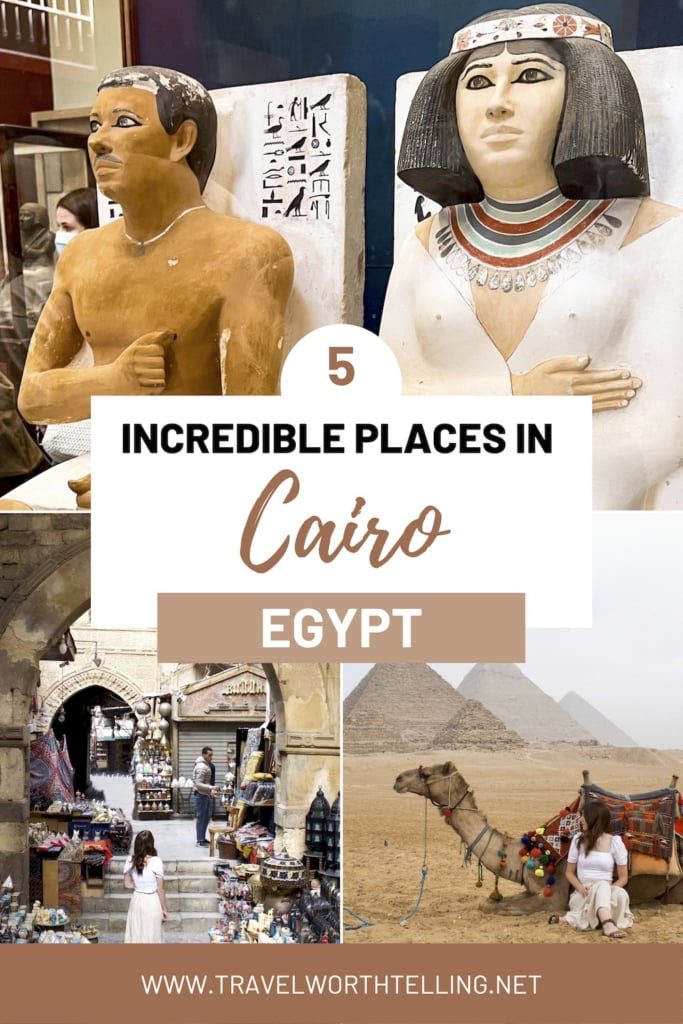
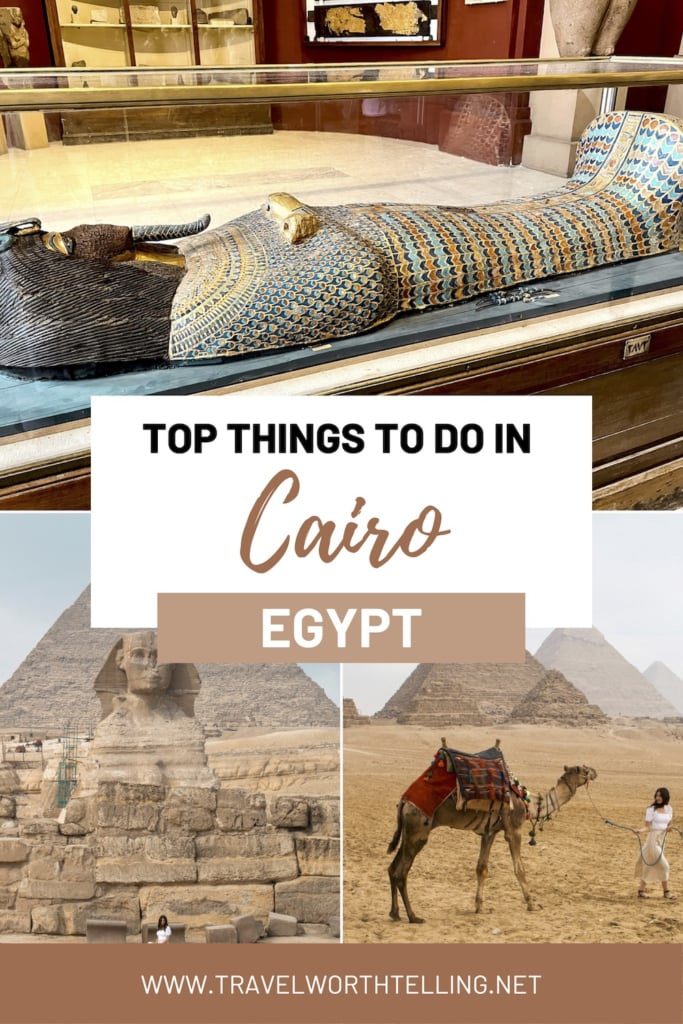
Cairo is Egypt’s capital and the largest metropolitan area in Africa and the Middle East. It has a population of over 10 million with another 9.5 million people living directly outside the city. It’s an interesting mix of old and new. Among the modern skyscrapers and trendy bars, you’ll find historic buildings and donkey carts.
Most people visit Cairo for its famous pyramids but there is so much more to Cairo. The massive, always-moving city can be equal parts exciting and overwhelming. I suggest a tour or following an itinerary to make the best use of your time. You won’t want to miss the following top places to visit in Cairo.
How to Get to Cairo
Cairo, being the capital city of Egypt, is well-connected and can be reached by various modes of transportation:
Air: The Cairo International Airport (CAI) is the primary gateway for international travelers. It’s well-connected to major cities around the world. Once you arrive at the airport, you can easily access the city center via taxis, airport shuttles, or ride-sharing services.
Train: Egypt has an extensive rail network connecting major cities. You can take a train to Cairo from other Egyptian cities like Alexandria, Luxor, or Aswan. The main train station in Cairo is Ramses Station.
Bus: Long-distance and intercity buses operate within Egypt, connecting Cairo with other cities. There are multiple bus terminals in Cairo, including the Cairo Gateway Bus Station.
Nile River Cruise: If you’re in Upper Egypt (the southern part of the country), you can take a Nile River cruise that will eventually reach Cairo. This option offers a unique and scenic journey through Egypt’s historical sites.
How to Get Around Cairo
Getting around Cairo can be an adventure in itself, as the city is bustling. When using transportation in Cairo, it’s essential to plan your route ahead of time, be aware of your belongings, and keep some local currency on hand for payments. Traffic can be congested, especially during peak hours, so factor in extra time when traveling to attractions. You definitely don’t want a car in Cairo. Here are the best ways to navigate the city:
Metro: Cairo has an efficient and affordable metro system with three lines. It’s a great way to avoid the city’s traffic. The metro connects major areas of the city, including popular attractions.
Taxi: Taxis are widely available and can be flagged down on the street or hired through ride-sharing apps. Make sure to negotiate or use a meter before starting your journey. I found that more often than not, they overcharged and the haggling got tiresome.
Uber and Careem: These ride-sharing services are popular and offer a convenient way to get around while avoiding fare negotiation. They are probably the easiest option; however, the one downside can be the language barrier. Many drivers do not speak English. This is a non-issue when traveling to well-known sites but for destinations that are off the beaten path, it can be a bit difficult. Be prepared to show the destination to the driver on a map.
Buses: Cairo has an extensive network of buses that cover various areas of the city. While buses are a budget-friendly option, they can be crowded and might not be the most comfortable choice for tourists.
The Best Time to Visit Cairo
Cairo only has two seasons: a scorching hot summer and a mild winter. The best time to visit Cairo is during the cooler months, which are generally from October to April. During this period, the weather is comfortable for exploring the city’s attractions, as the temperatures are milder and more manageable than the heat of the summer months.
October to November: These months mark the start of the cooler season, with pleasant temperatures and lower humidity. October is still pretty warm but November really starts to cool off. It’s a great time for sightseeing and outdoor activities.
December to February: These are the coolest months in Cairo. Evenings can be chilly and there’s a small possibility of rain but it’s generally great for exploring. It’s also the peak tourist season, so attractions will be busier and accommodations will be more costly.
March to April: These months see gradually warming temperatures, making it another favorable time to visit. The city is still relatively less crowded than in the winter months.
Avoid visiting Cairo during the summer (May to September) due to extremely high temperatures that can make outdoor activities unpleasant. Additionally, Ramadan, the Islamic holy month of fasting, affects the city’s rhythm as many businesses and attractions might have altered hours during this period.
How Long in Cairo
The number of days you should spend in Cairo depends on your interests and what you’d like to experience in the city. Cairo is a vibrant and historically rich city with a lot to offer. Weeks could be spent exploring but I recommend 3 to 5 days. With this amount of time, you’ll be able to cover this list of places to visit in Cairo and will get a good mix of historical, cultural, and modern experiences at a somewhat relaxed pace.
Most of the major sites can be seen in a day or two, add a third day if you wish to spend some time in historic Cairo or visit Saqqara. If you wish to do a day trip, such as Memphis or Alexandria, add an additional day or two.
Places to Visit in Cairo:
1. Pyramids of Giza & the Great Sphinx
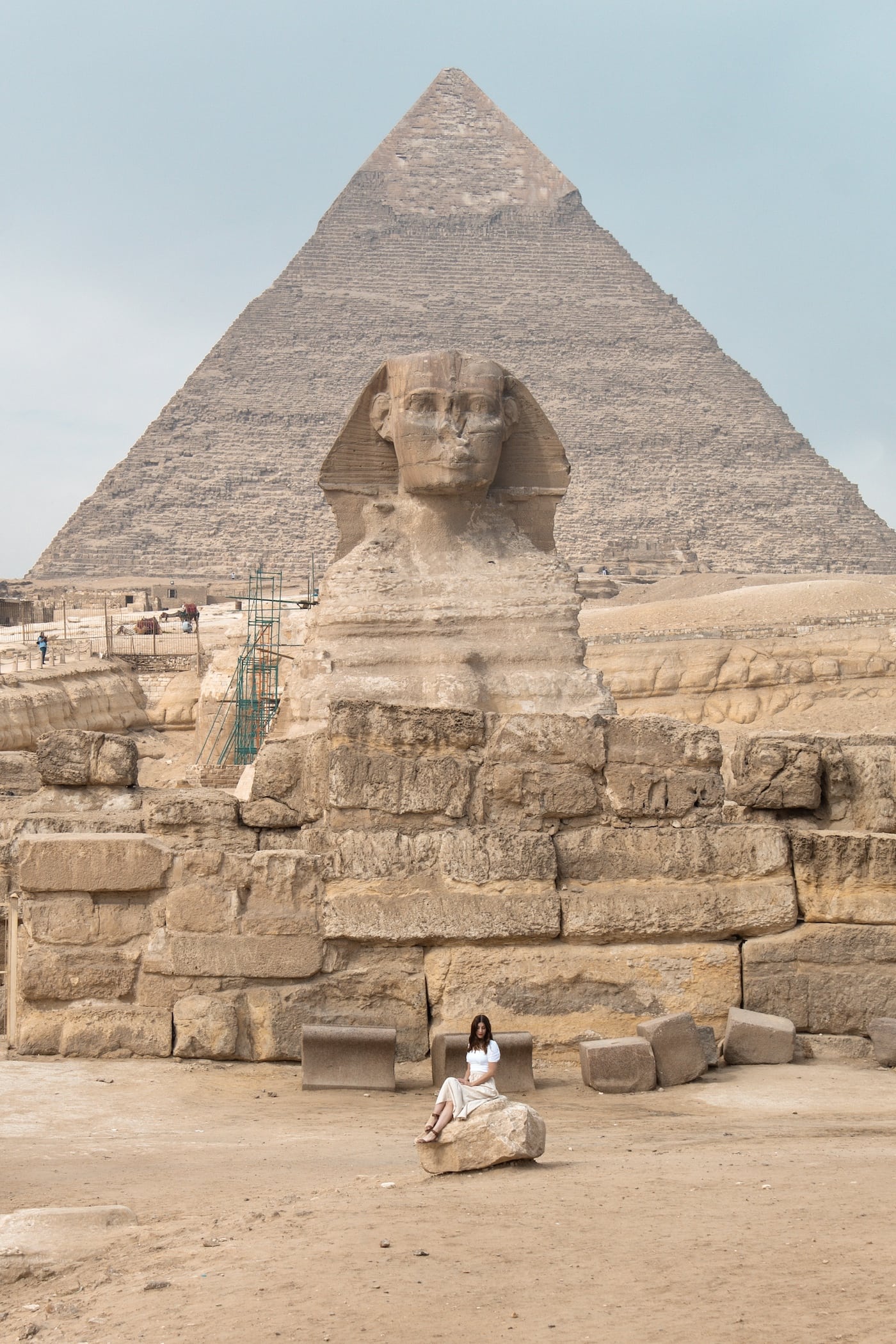
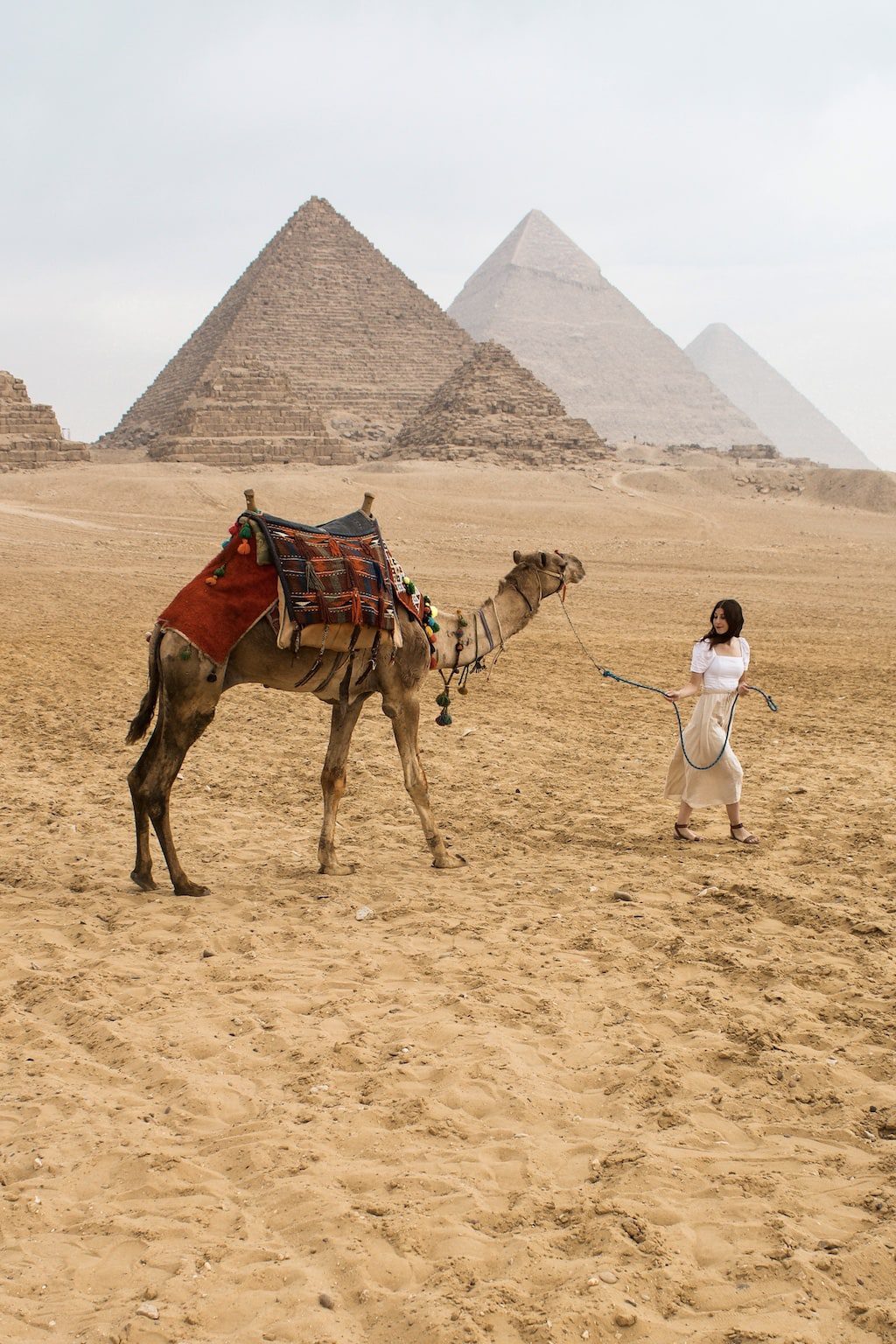
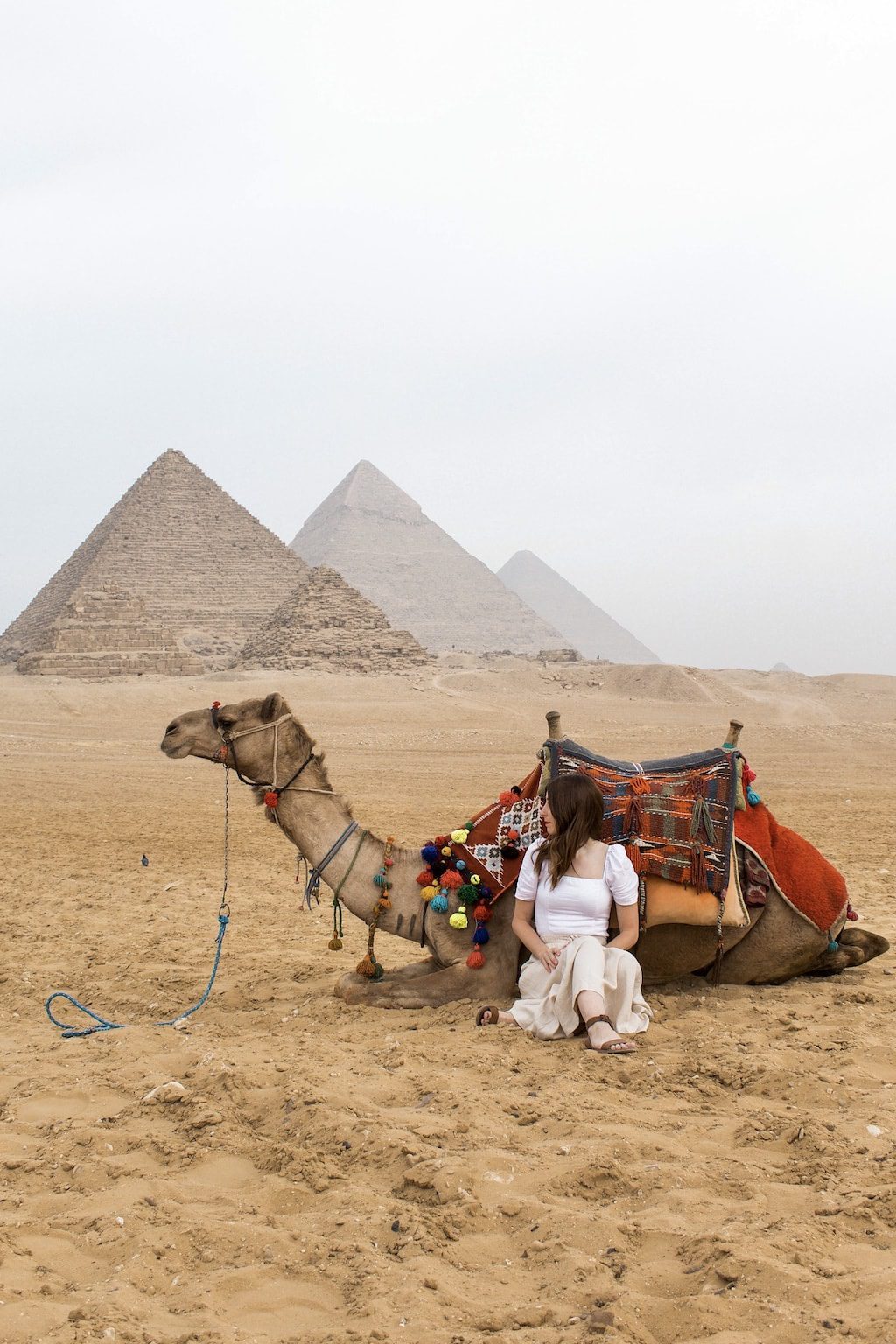
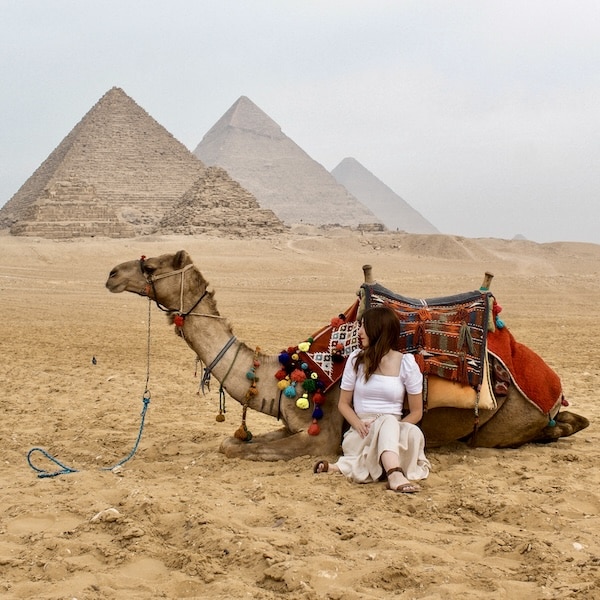
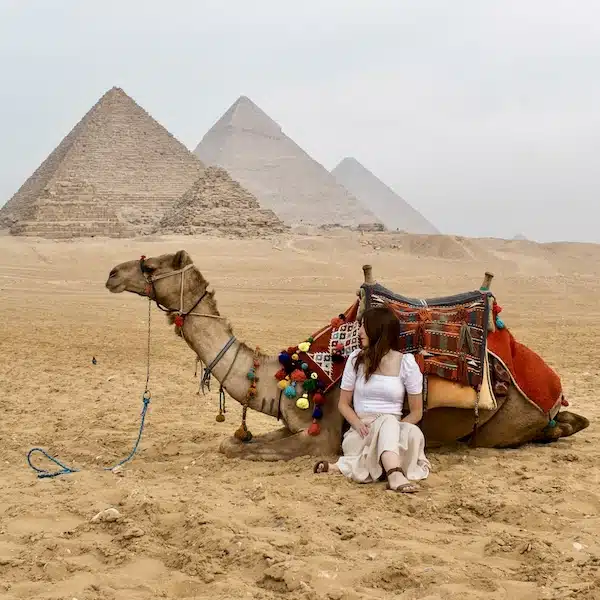
The Pyramids and the Great Sphinx of Giza should top your list of places to visit in Cairo. The Giza Pyramid Complex contains the Great Pyramid of Giza, the Pyramid of Khafre, the Pyramid of Menkaure, and the Great Sphinx of Giza. They were all built during the fourth dynasty of the old kingdom between 2600 and 2500 BC and were thought to be constructed to house the remains of the deceased pharaohs. The Great Pyramid of Giza and the Pyramid of Khafre are the largest pyramids in ancient Egypt and the Great Pyramid is the last standing of the Seven Ancient Wonders.
The site was declared a UNESCO World Heritage Site in 1979 and is one of Egypt’s most visited attractions. The famous pyramids are located in Giza, just 11 mi (18 km) southwest of downtown Cairo. However, in heavy traffic, it can 45 minutes to reach so make sure to plan ahead. I recommend visiting first thing in the morning to avoid the crowds as much as possible.
Please don’t ride the camels. Most of them are worked hard and often in extreme heat with little water. I carefully researched tour operators and expressed how important it was to me that the camels were treated properly before taking photos with them. I never at any time rode the camels and spent about 20 minutes hanging out with them. They’re really sweet animals. I’m aware that by giving the camel owner money, I still contributed to the problem but I like to think I saved it from one less ride that day.
Ticket Price
200 EGP/ Student: 120 EGP with a valid ID (additional 400 EGP to go inside the pyramid)
Site Hours
Summer: 8 am – 5 pm/ Winter: 8 am – 4 pm (last admission is one hour before closing)
2. Shop the Khan El-Khalili Bazaar
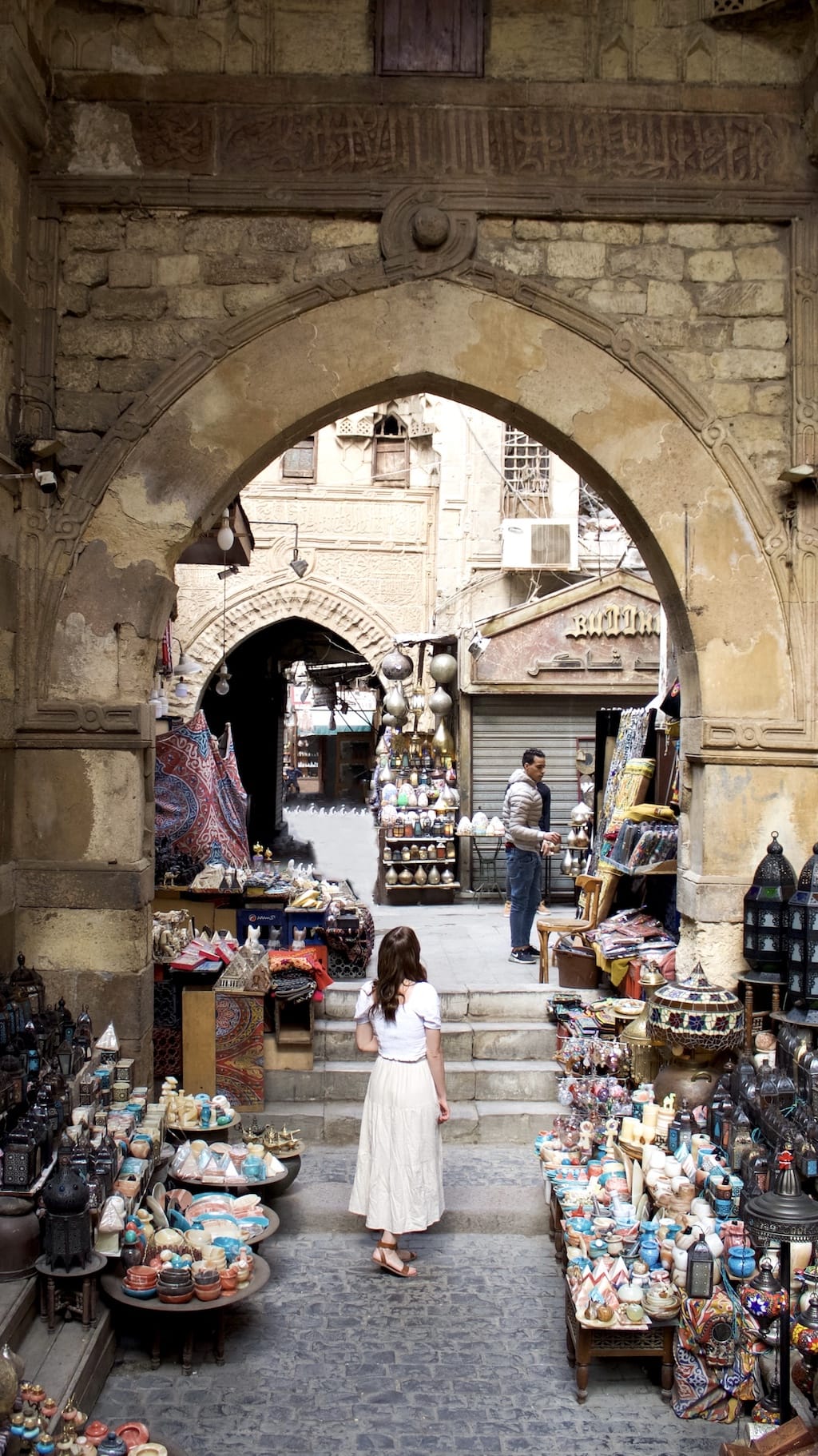
Khan El-Khalili Bazaar is located in the heart of historic Islamic Cairo. It is a vibrant and bustling open-air market renowned for its rich heritage and economic importance. Dating back to the 14th century, it is the world’s oldest souk and one of the top places to visit in Cairo.
The bazaar is a labyrinthine network of alleyways adorned with traditional architecture, where local artisans, traders, and vendors sell an array of goods. You’ll find intricately designed carpets and textiles, jewelry, spices, beautiful brass lanterns, and traditional crafts. Prices are negotiable, so don’t be afraid to haggle. There are also great restaurants nearby, serving traditional Egyptian food.
3. Historic Cairo (Islamic Cairo)
Historic Cairo, also known as Islamic Cairo or Old Cairo, is a captivating district that transports visitors back in time. It is the area that existed prior to Cairo’s modern expansion. It encompasses a maze of narrow alleyways, ancient mosques, and beautifully preserved Islamic architecture, including the stunning Sultan Hassan Mosque and the intricately adorned Al-Rifa’i Mosque.
Other highlights include the Al-Azhar Mosque, the Mosques of Mohamed Ali, and the Citadel of Salah Ed-Din. A guided tour is a great way to see many of these as well as Khan El-Khalili Bazaar.
4. Tour the Egyptian Museum
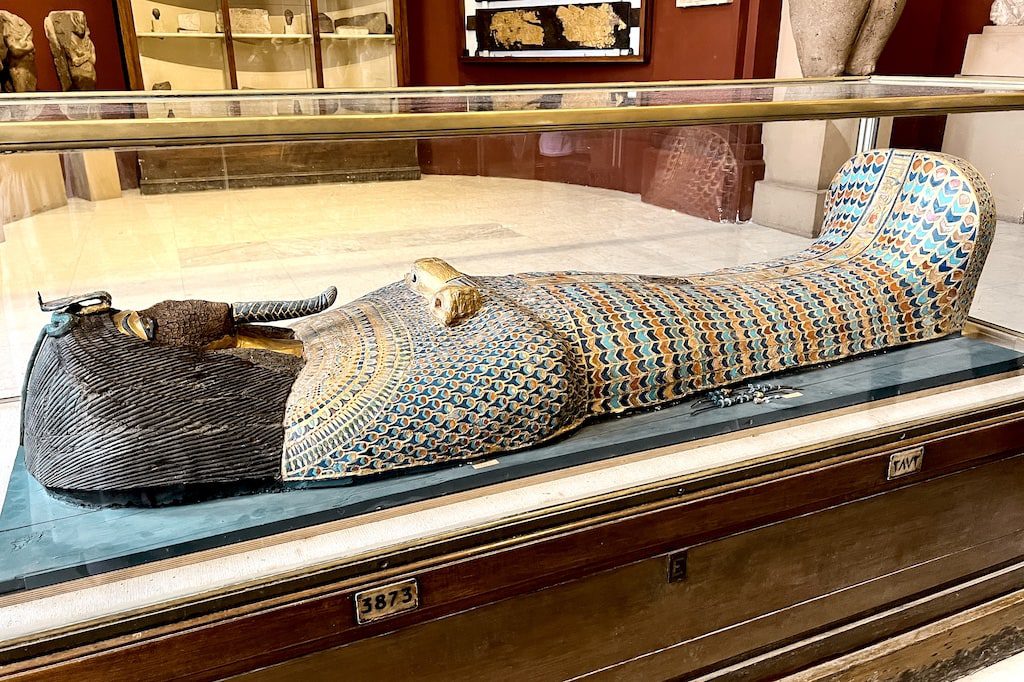
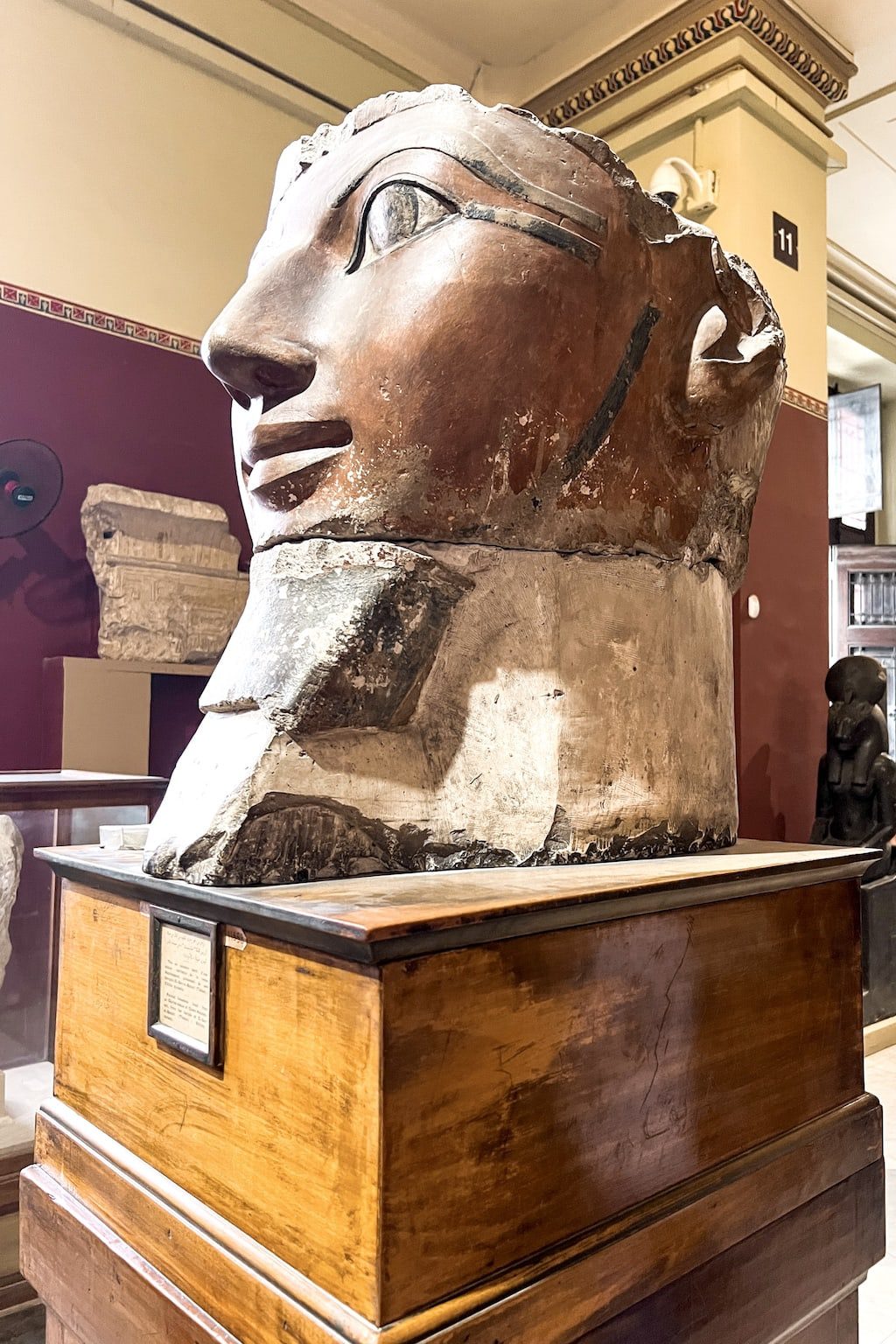
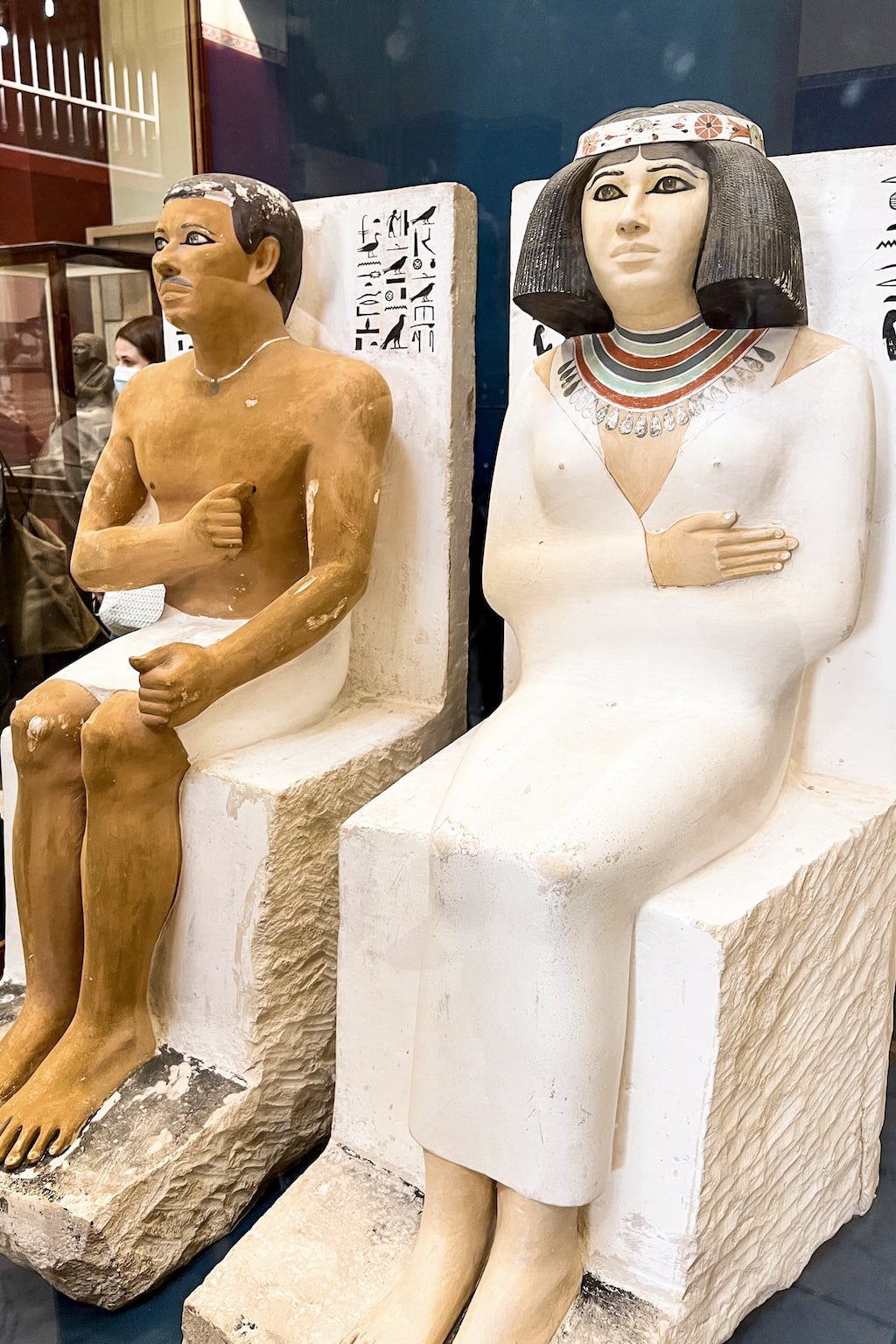
The Egyptian Museum is currently in the process of being moved from Cairo to Giza and becoming the Grand Egyptian Museum. A massive new structure was recently built next to the Giza Pyramid Complex and is set to open in late 2023. When it opens, the Grand Egyptian Museum will be the largest archaeological museum in the world. It will have over 100,000 pieces that span 3,000 years. It will also house the complete Tutankhamun collection, which includes all 5,000 pieces that were found inside the king’s tomb. Many of these items will be on display for the first time.
As of August 2023, it’s unclear if the original Egyptian Museum in Cairo is still open to visitors. Please check directly with the museum before making plans. Just know that many of the pieces have already been moved to the new location. I visited in February of 2022 and it was still very much worth visiting. King Tut’s famous mask had yet to be moved and the museum had such a vast collection that I could have easily spent a day there, even with half of the items missing. The new museum is going to be incredible. I recommend visiting with a guide who can share some history of the pieces.
Ticket Price
200 EGP/ Student: 100 EGP with a valid ID
Site Hours
Daily: 9 am – 5 pm (ticket window closes at 4:15 pm)
5. Saqqara Archaeological Site
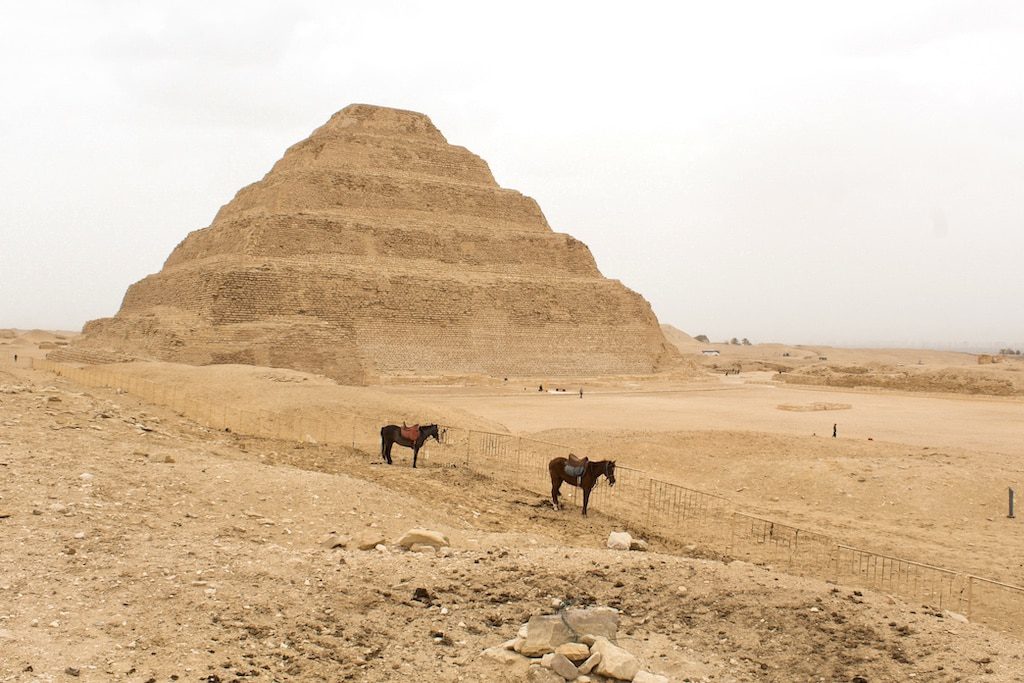
The pyramids of Saqqara (also spelled Sakkara) may not be as famous as those of Giza but I still consider the site one of the top places to visit in Cairo. The site is about 20 mi (32 km) south of Cairo and the drive is about 45 minutes from Giza. It has numerous pyramids and tombs; the most well-known being the Pyramid of Djoser, which is the world’s oldest complete stone structure. The pyramid is a step pyramid that stands 196 ft (60 m) high and is made out of sandstone.
The tombs contain kings from the first and second dynasties and the first king of the third dynasty. The kings of the fourth dynasty selected Giza for their tombs but the kings of the fifth and sixth dynasties returned to Saqarra.
Saqqara covers a large area so if you are short on time, I recommend visiting the Imhotep Museum, the Step Pyramid, the Serapeum, and the Tomb of Ti. Guides are available onsite and can give you the history of each structure. Just make sure to negotiate a rate beforehand. If you decide to Uber to the site, make sure the driver will wait for you. There aren’t many drivers or taxis available in the area. You can also book a tour that includes both the Great Pyramids and Saqqara.
Ticket Price
180 EGP/ Student: 90 EGP with a valid ID
Site Hours
Daily: 8 am – 5 pm
Where to Eat in Cairo
139 Pavilion
139 Pavilion is located in the Marriott Mena Hotel in Giza. The restaurant is known for its fantastic views of the pyramids. It’s a great spot for lunch since the pyramids aren’t always lit up at night. The restaurant serves international cuisine and offers both an a la carte menu and a buffet.
Le Pacha 1901
Le Pacha 1901 is home to some of Cairo’s best restaurants. Its signature restaurants are the Italian Piccolo Mondo and the French Le Steak. Additions have been made over the years that include Asian-inspired L’Asiatique, the Egyptian Le Tarbouche, and Indian Maharani. The collection consists of eight international restaurants and sits on the Nile in central Cairo.
Egyptian Pancake House
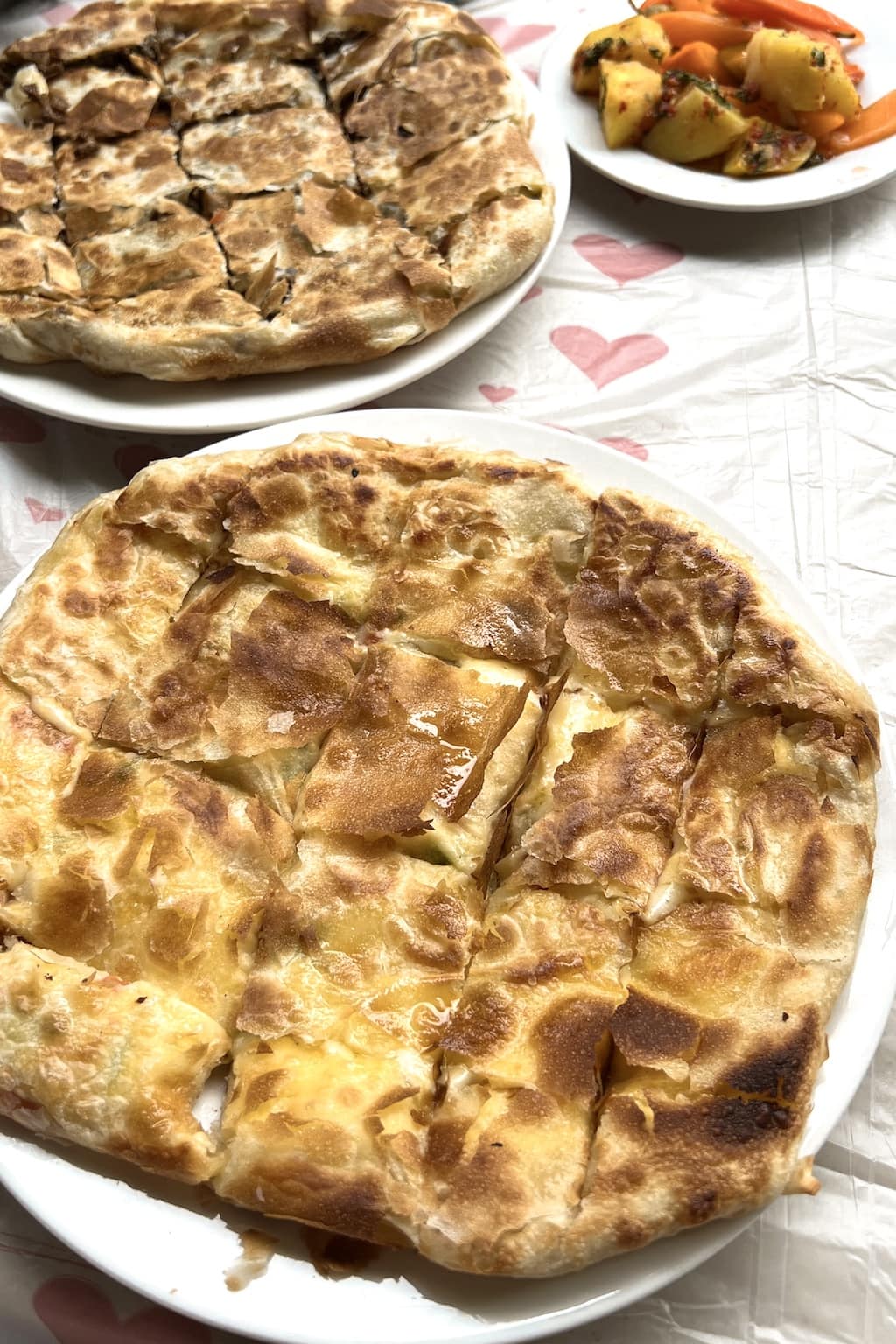
The Egyptian Pancake House is located near the entrance of Khan El-Khalili Bazaar and Hussein Square. The pancakes served are nothing like your traditional American pancakes but are flaky pastries stuffed with cheese, meats, or veggies. They’re delicious and super affordable. There’s also a patio area that is great for people-watching. The Pancake House is a must-do on this list of places to visit in Cairo.
Where to Stay in Cairo
Depending on what you want out of your visit to Cairo, you can either stay in central Cairo or Giza. Central Cairo is extremely busy but you will have access to many shops and restaurants. Giza is quieter and has less to do but staying there makes visiting the pyramids easy. I chose to stay in Giza because it is more my speed and found it perfect for two days.
Marriott Mena House is a beautiful hotel, located in Giza, It has great views of the pyramids and the Giza Pyramid Complex is just a 10-minute walk. The hotel has an on-site pool, fitness center, two restaurants, a bar, and two lounges.
The St. Regis Hotel is a luxurious hotel located in central Cairo. The hotel has an indoor and outdoor pool, restaurant and bar, fitness center, and evening entertainment. It’s located on the Nile and offers beautiful views. The Egyptian Museum (current location) is 3 mi (4.8 km) from the hotel, while Khan Al Khalili Bazaar is 3.4 mi (5.5 km).
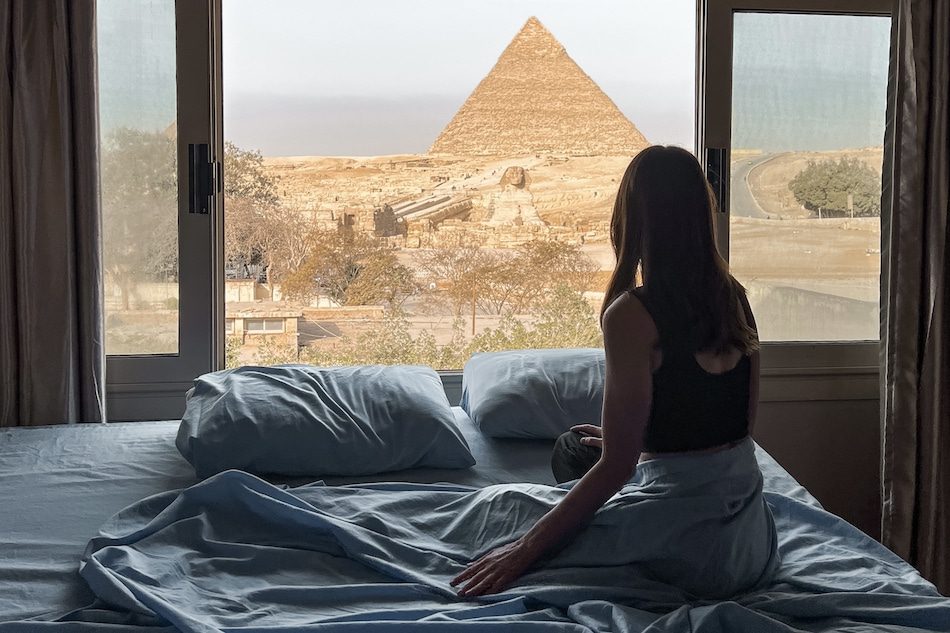
Guardian Guesthouse is a great choice in Giza. It’s super affordable and the family that runs it is very kind. It also has the best views of the pyramids and sphinx. The Giza Pyramid Complex is literally across the street. It was incredible to watch the sun rise and set over the pyramids from our room. The guesthouse also has rooftop access allowing you to watch the light and sound show for free.
Have you been to Egypt? What are your favorite places to visit in Cairo? If you’ve enjoyed this post, please leave a comment or share using the social media buttons below. Looking for the perfect Egypt itinerary? Continue to my post, “The Ultimate 7 Day Egypt Itinerary“.





Leave a Reply