Disclaimer: This post contains affiliate links. If you click through and make a purchase, I may receive a small commission (at no additional cost to you). This helps support and run my blog. I only recommend products I personally use and love. Thank you for your support.
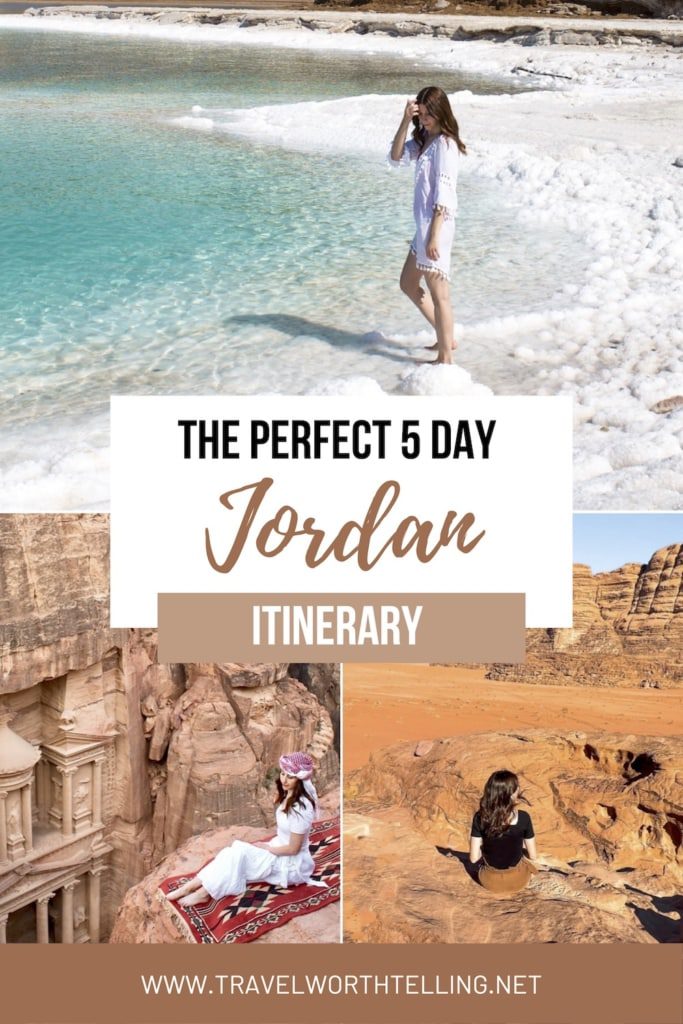
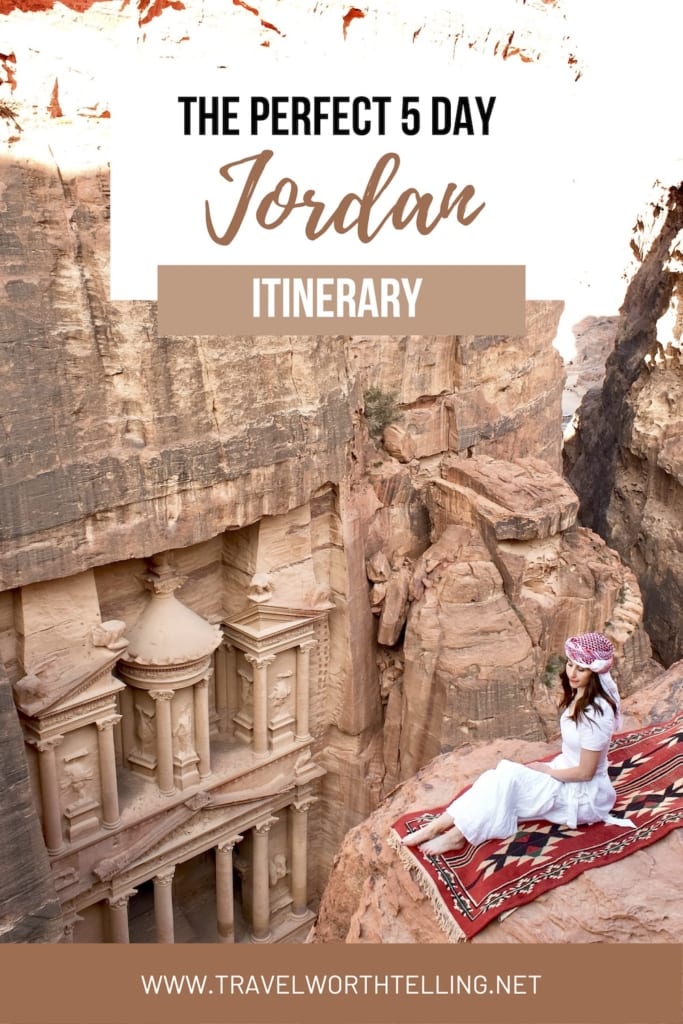
Jordan is the trip of a lifetime. The country’s diverse landscape allows you to visit iconic archaeological sites, explore its incredible desert, and float in one of the world’s saltiest bodies of water. Jordan is a small country but is nothing short of spectacular. Don’t underestimate it. I did and regret it.
Jordan is located in the Middle East and is a quick flight from Egypt so I decided to visit them together. I carefully planned the Egypt portion of my trip and spent the majority of my time there. Jordan was an afterthought to me. I only gave myself three full days there and upon arrival, I knew I should have set aside more time. I was able to see the major sights but it felt very rushed. The following is what I should have planned for myself and what I consider the perfect 5-day Jordan itinerary. Please take into consideration that this Jordan itinerary does not include travel days.
How to Get to Jordan
Jordan has two airports Queen Alia International Airport (AMM) in Amman and Aqaba King Hussein International Airport (AQJ) in Aqaba. Queen Alia International Airport is located in northern Jordan and Aqaba King Hussein International Airport is located in the south. Depending on your itinerary, one or the other may work better for you.
Flying into Amman is the more popular option and will likely be more affordable. Aqaba can save you time if you only wish to see the southern portion of the country; however, you will likely have a stop in Amman anyway. You may also want to explore the option of flying into Amman and departing from Aqaba.
Best Time to Visit Jordan
Jordan can be a year-round destination but summers are hot and winters see rain and even the occasional snowfall. The ideal time to visit Jordan is in the spring or fall. March to May and September to November have warm, sunshine-filled days and cool nights. This is the perfect time for outdoor activities. These months are also considered the high season. You can expect crowds at the major attractions and high prices for accommodation. Make sure to plan ahead and book early.
The low season is from December to February. Money can be saved by traveling during this time but outdoor activities may not be possible. Jordan sees 75% of its rainfall during its short winter. Heavy rains can lead to flash flooding and the closure of attractions. February can be great if you’re ok with some rain. I visited in mid-February and it was perfect. The mornings and evenings were cold but most afternoons were sunny and warm. There were a couple of light showers but nothing that disrupted our plans.
Summers can be brutally hot and reach temperatures over 100° (38° C). It’s possible to visit during this time but you’ll have to plan your days carefully. Plan outdoor activities for early morning or evening. Visit museums and do things indoors at midday to avoid the harsh sun and heat.
When planning your trip, you’ll want to be aware of the dates Ramadan falls on. Ramadan is a holy month for Muslims and its date shifts each year. It’s a time of fasting, prayer, and reflection. During this month, you may find restaurants and some businesses closed.
How to Get Around Jordan
Car/ Taxi: The best way to get around Jordan is by car. Jordan is a small country and is easily navigable. Renting a car is affordable and will give you the freedom to see the places on this Jordan itinerary at your own pace. The scenery in Jordan is beautiful and you’ll be glad that you have the option of stopping at your leisure.
Driving in busy Amman can be somewhat stressful but driving through the rest of the country is very easy. There are remote areas with rougher roads but the roads are well-marked and I had no issues. Make sure to keep your passport nearby to show at checkpoints.
Uber and taxis are also available. However, they are a much more costly option, especially if traveling long distances. Uber can be great for getting around Amman and larger cities.
Group Tour: Another option is to join a tour. You can join a multi-day tour or base yourself out of Amman or Aqaba and do day trips. Most tours move at a faster pace and allow time for just the country’s highlights. A tour might benefit those who are traveling solo or those who want to save a bit of money by going with a group. Many 3-day tours include the Dead Sea, Petra, and Wadi Rum.
Plane: There are flights available on Royal Jordanian that will take you from Queen Alia International Airport (northern Jordan) to Aqaba King Hussein International Airport (southern Jordan) and vice versa. The flight is about an hour long and starts at roughly $100 USD. I’m not sure this would save you any time since the drive from Amman to Aqaba is only 4 hours but it might be a good option if you are uncomfortable driving.
5-Day Jordan Itinerary
Day 1: Amman
Amman is the capital of Jordan and the country’s largest city. It’s a modern city with ancient ruins, great food, and unique culture. Fly into Amman and spend your first day exploring the city.
Choose a couple of Amman’s top attractions to visit in the morning. I recommend the Citadel and the King Abdullah Mosque. You can visit these sites independently or go on a guided tour.
Spend your afternoon wandering the city’s hilly streets and try some of its delicious food. Visit Sufra for authentic Jordanian food. The bright and airy restaurant has an option for outdoor dining and even a rooftop. Make sure to order the hummus, freshly baked laffa bread, and falafel. Everything was great. Keep in mind that outside of the city and in the tourist areas, most of the food is disappointing (or at least this was my experience). Take advantage of what may be your last really good meal for a couple of days.
I suggest adding one more day to this Jordan itinerary if you wish to do a day trip to the Roman ruins of Jerash from Amman.

Day 2: Dead Sea
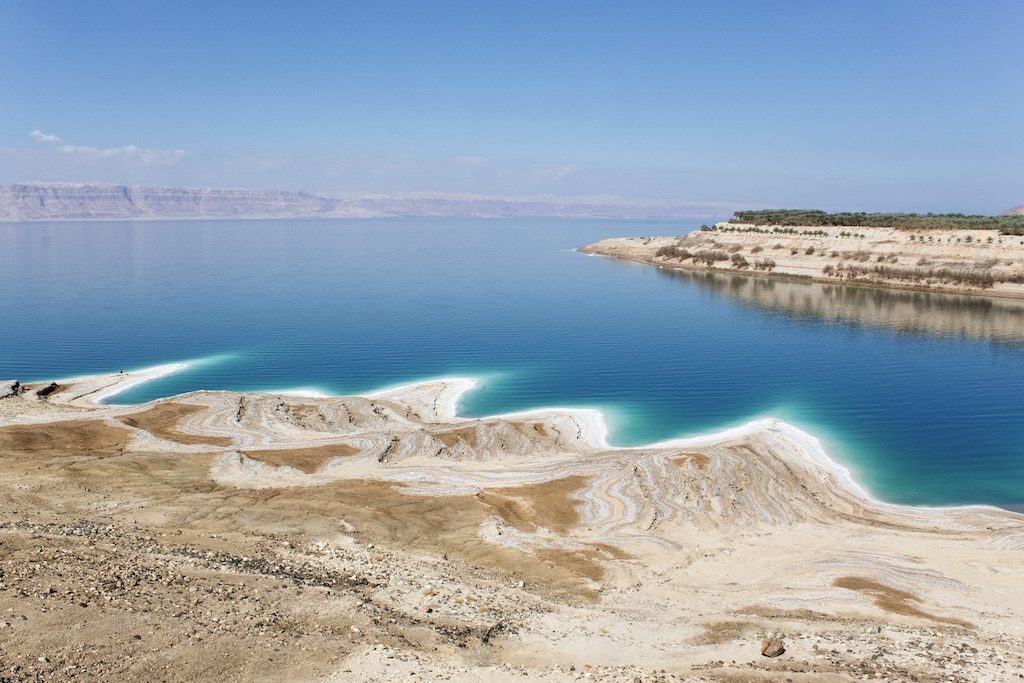
The Dead Sea is a high-salinity lake located on the border of Jordan and Israel. It is one of the saltiest bodies of water in the world and the lowest point on Earth. It’s measured at 1411 ft (430 m) below sea level and drops about 3 ft (1 m) every year. You’ll find yourself buoyant and able to float due to the water’s high salt content.
The Dead Sea Hotel area offers areas of the beach suitable for swimming (floating). Most of the hotels are about an hour-long drive from Amman. I recommend an overnight at one of the hotels. It’s a great opportunity to relax before heading to the busy tourist sites and watching the sunset over the sea is an incredible way to spend the evening. However, if you just want to stop for a quick float, most of the hotels do offer a day pass.
I recommend a stay at the Dead Sea Spa Resort, Kempinski Hotel Ishtar Dead Sea, or Dead Sea Marriott Resort and Spa. I stayed at the Dead Sea Spa Resort. It seemed to be the best value. They have a spa on-site and have dead sea mud available for application at the beach. Don’t expect to see the beautiful salt-lined shores at the hotels. These areas are further south (more on that below).
Tip: Due to the high salinity, you probably won’t want to spend more than 20 minutes in the water at a time. The water is relaxing but it’s also oily and makes your skin itch. Make sure to bring an old swimsuit and don’t shave the day before. Any small cuts or open skin will sting.
Day 3: Dead Sea & Wadi Mujib
Wake up early and head to Wadi Mujib Biosphere Reserve. It’s a 30-minute drive from the Dead Sea hotels or a two-hour drive from Amman. Wadi Mujib is the lowest nature reserve in the world. The beautiful reserve has canyons, hot springs, and sandstone rock formations. Hiking is the best way to experience the area. You’ll want to book your hike early in the day since the number of people allowed on each trail at a time is limited. All hikes are first come first serve and are of varying difficulty. Visitors must be 18 years or older.
All of the trails require a guide except the Siq Trail. The Siq Trail is the most popular and one of the most unique. The trailhead is located near the Mujib Biosphere Adventure Center. The trail winds through a narrow sandstone canyon along the river and ends at a waterfall. Most of the hikes at Wadi Mujib, including the Siq Trail are seasonal so keep this in mind when planning your trip. The preserve is closed during the winter due to high water levels. I visited in February and was disappointed to find out that I couldn’t go.
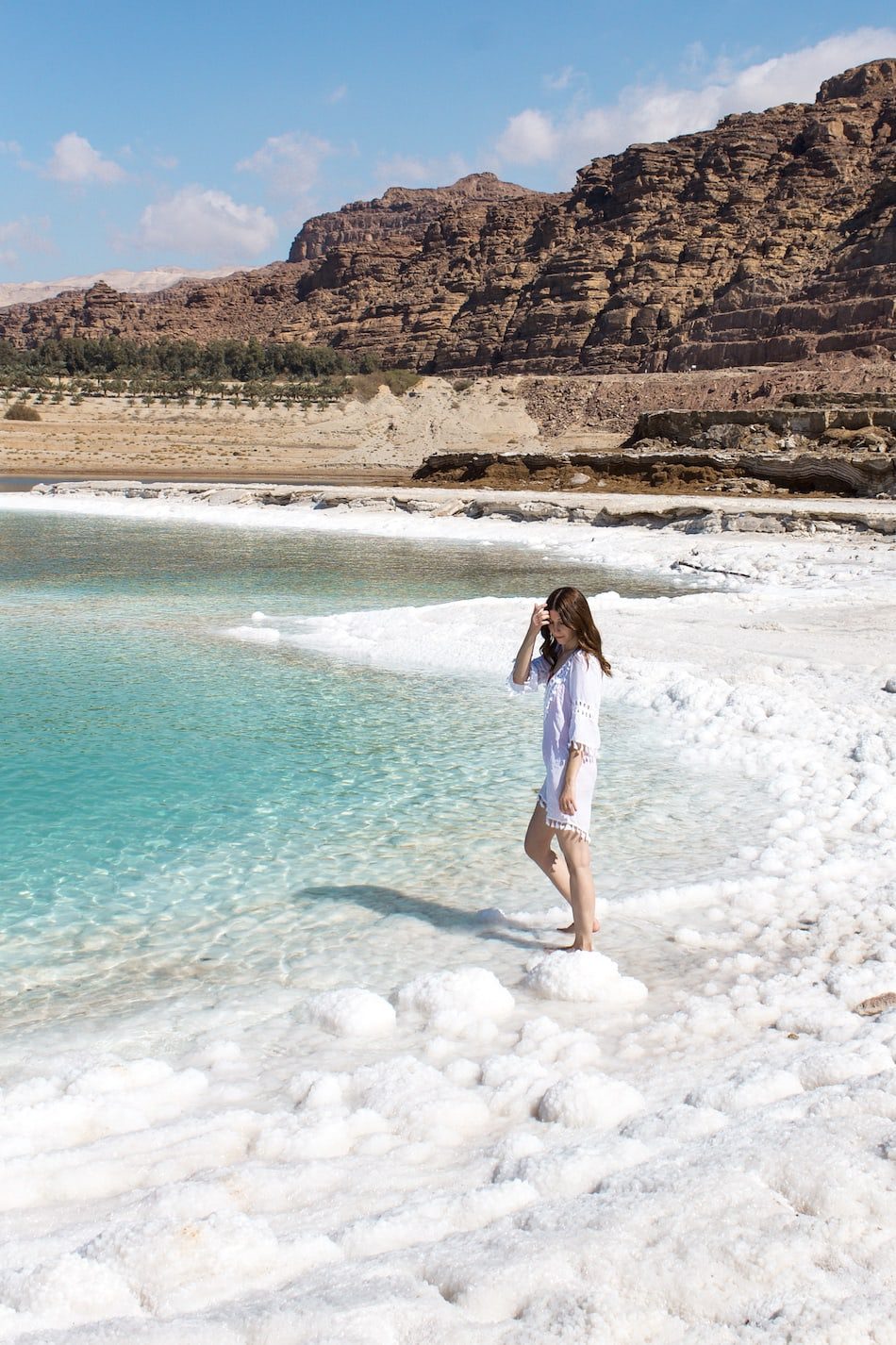
In the afternoon, start driving south toward Petra, where you’ll stay for two nights. As mentioned above, the shoreline surrounding the Dead Sea hotels doesn’t have the beautiful salt formations you see in photos. The salt formations are directly south of Wadi Mujib, so this is the perfect time for a stop. The area can be found on Google Maps by searching “Dead Sea free swimming” or “Coral Reefs” (coordinates are 31.45690769565032, 35.570354406581004).
This location is great for photos but not so much for swimming. The salt-lined shore is sharp and can cut your feet. If you want to swim here then bring water shoes. There is free parking and a place to change/ rinse off for a small fee at the top of the hill. Continue to your Petra hotel afterward.

The Dead Sea
Day 4: Petra
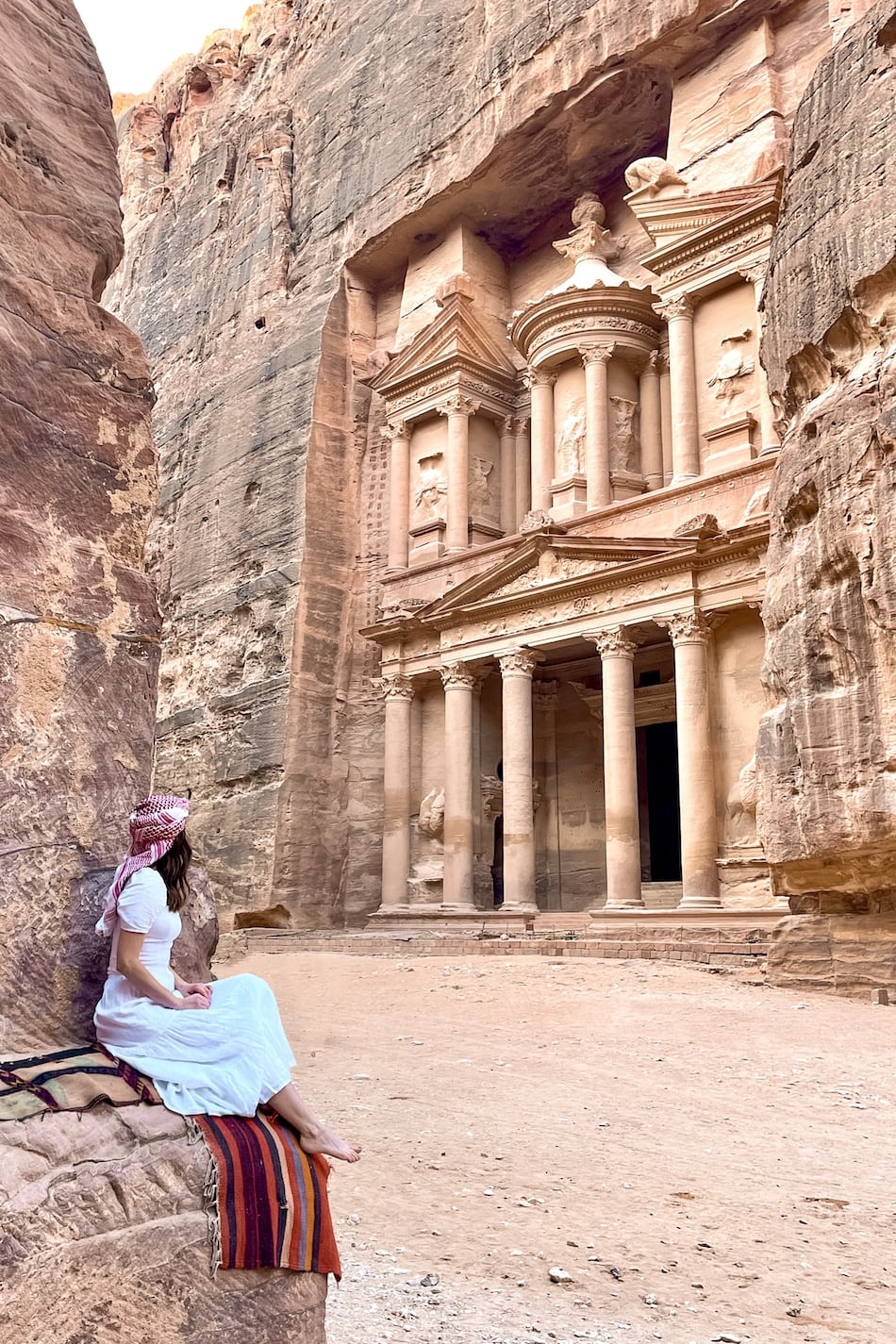
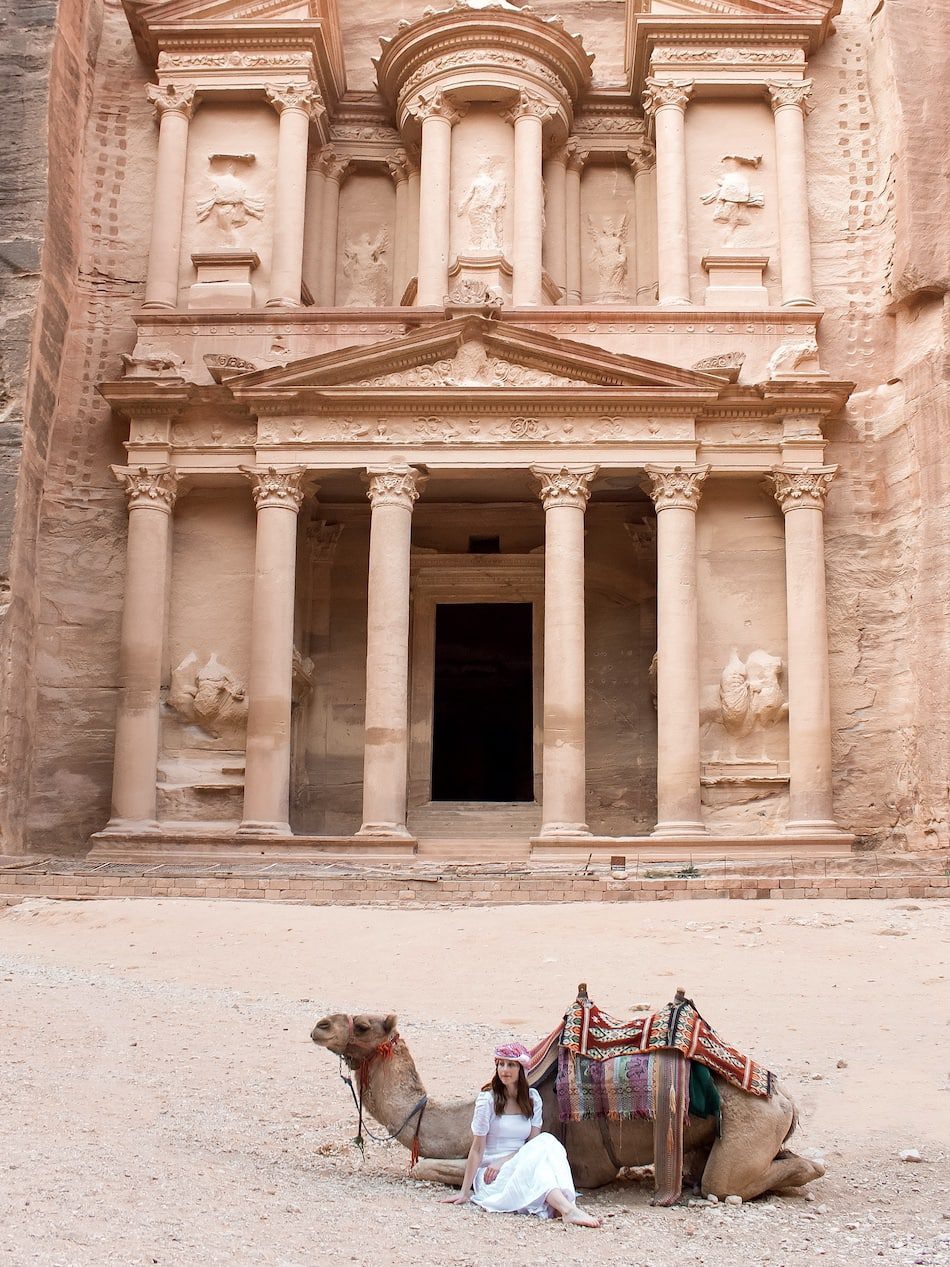
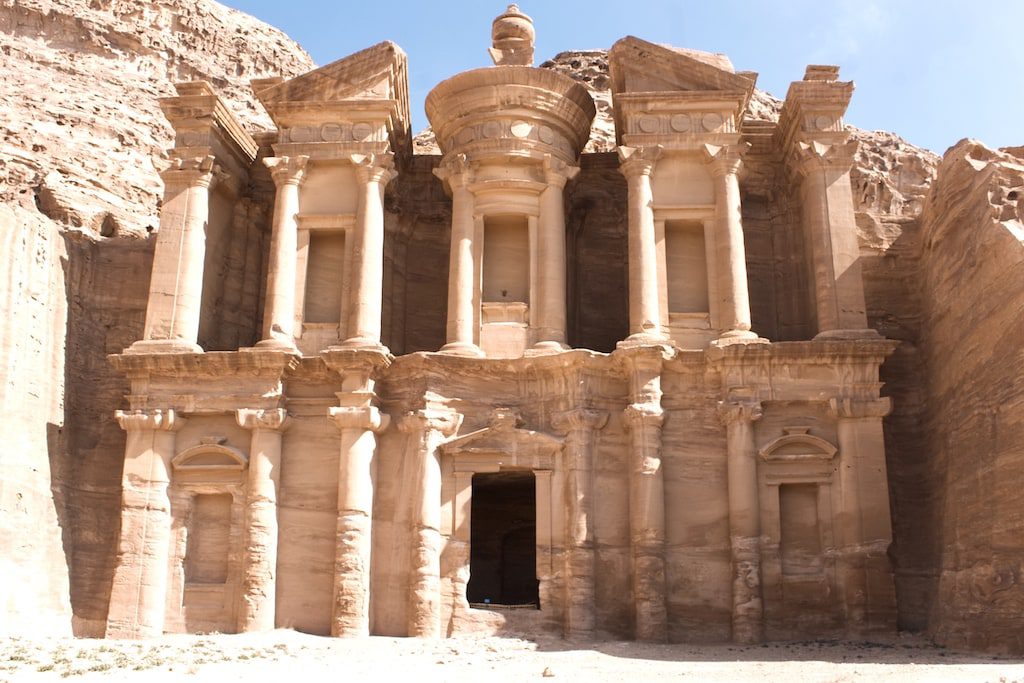
The ancient city of Petra is the most visited attraction and a must-do on this Jordan itinerary. Petra is a UNESCO World Heritage site and one of the new Seven Wonders of the World. It’s incredible! It’s also massive. I recommend hiring a guide or choosing two trails to complete. If you wish to see more, I suggest adding a day to this Jordan itinerary. You’ll want to arrive first thing in the morning. Early morning sees fewer crowds and afternoons can get quite warm, even during the winter months.
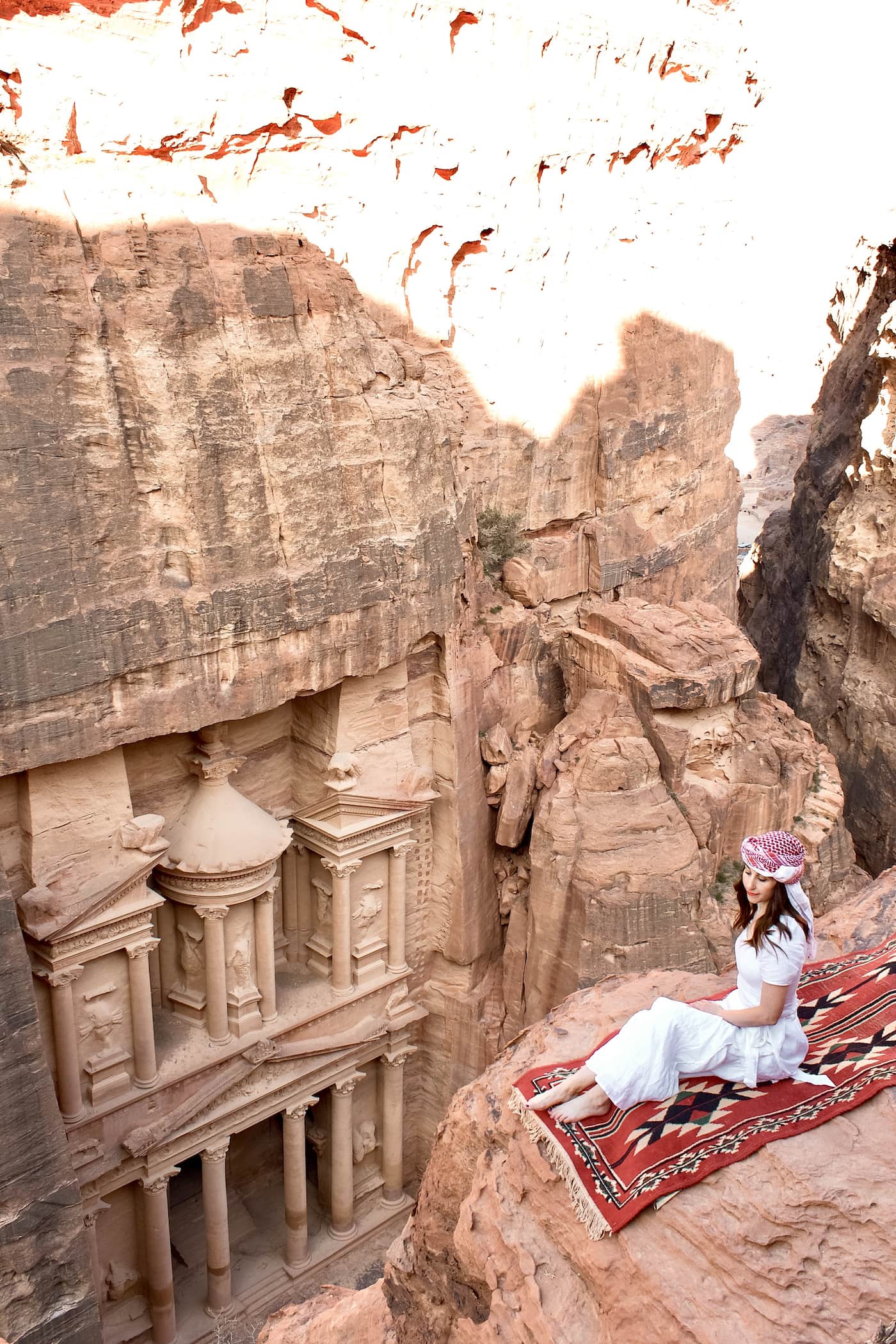
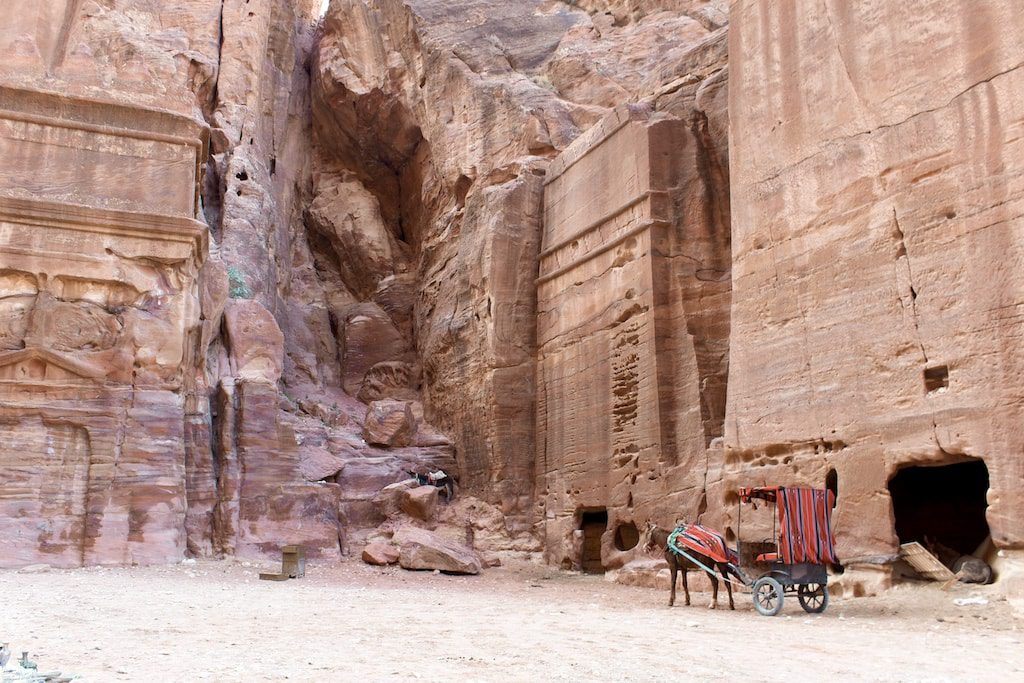
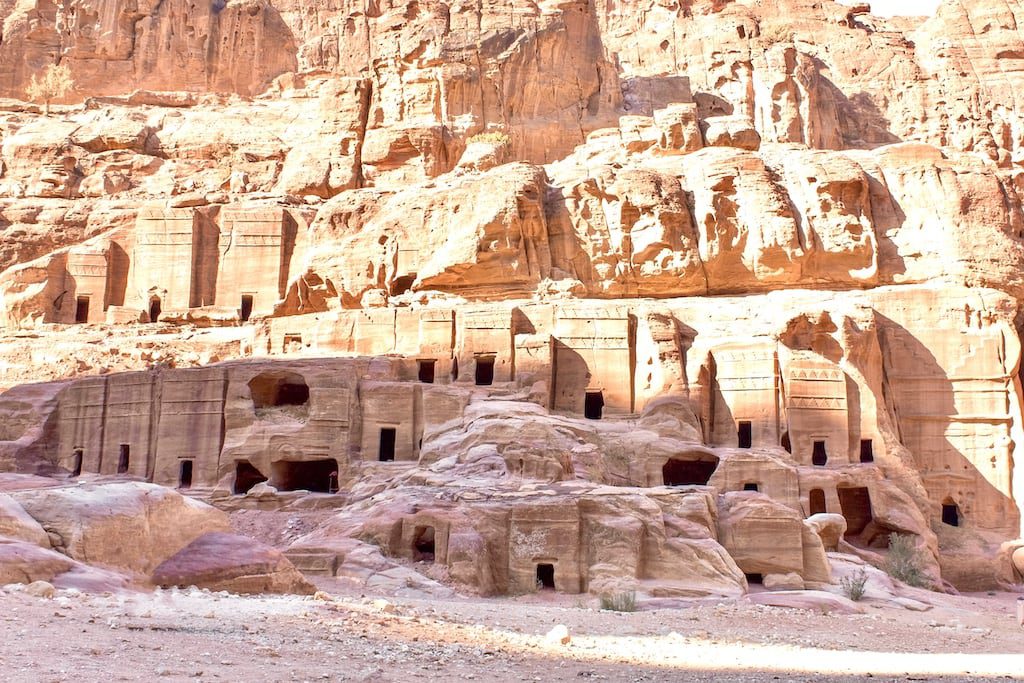
I recommend starting with the main trail. The main trail is 5 mi (8 km) and starts at the visitor’s center. It’s mostly flat and is the easiest trail. On the main trail, you will find the Siq, the famous Treasury, the Street of Facades, the Roman theater, the Royal Tombs, and the Great Temple. Make the Treasury your first stop. Take some photos from the ground level and then continue up the hillside with a local for incredible views.
There are two viewpoints directly next to the Treasury. I recommend the one on the left if you are facing the structure. It takes just 20 minutes but be aware that it is steep and it should not be attempted alone. It can be dangerous and a tourist has died before. Negotiate a price with the guide beforehand ($10 USD). If you have the time, there is also a longer and much safer route to take to this location.
The second trail that I suggest doing is Ad-Dier. This trail will take you to Petra’s second most magnificent structure, the Monastery. The hike includes over 800 stairs and I would say it’s of medium difficulty. The locals will tell you that you are crazy to attempt this hike on foot, that it takes 5 hours, and it’s extremely difficult. This is to scare you into their offer of a mule.
You absolutely do not need a mule. Please don’t use them. They are mistreated and overworked. It’s very sad to see them struggling up the mountainside in the extreme heat with a ton of weight and no water. If you aren’t capable of doing the hike on foot, then there are plenty of other hikes. The hike is doable in under two hours and should take 3 hours at the most. Make sure to bring water. There is a place with drinks and snacks available at the top.
You may wish to coordinate your travel dates with Petra at Night, where you can access the Treasury after hours and see the site lit by candlelight. Petra by Night takes place every Monday, Wednesday, and Thursday. This is a popular activity but I chose to skip it. The walk from the Treasury is 1.5 mi (2.4 km) from the visitor center and while this isn’t horribly long on its own, I was too exhausted from spending the day exploring. I recommend staying at the nearby Petra Guesthouse Hotel.
Day 5: Wadi Rum
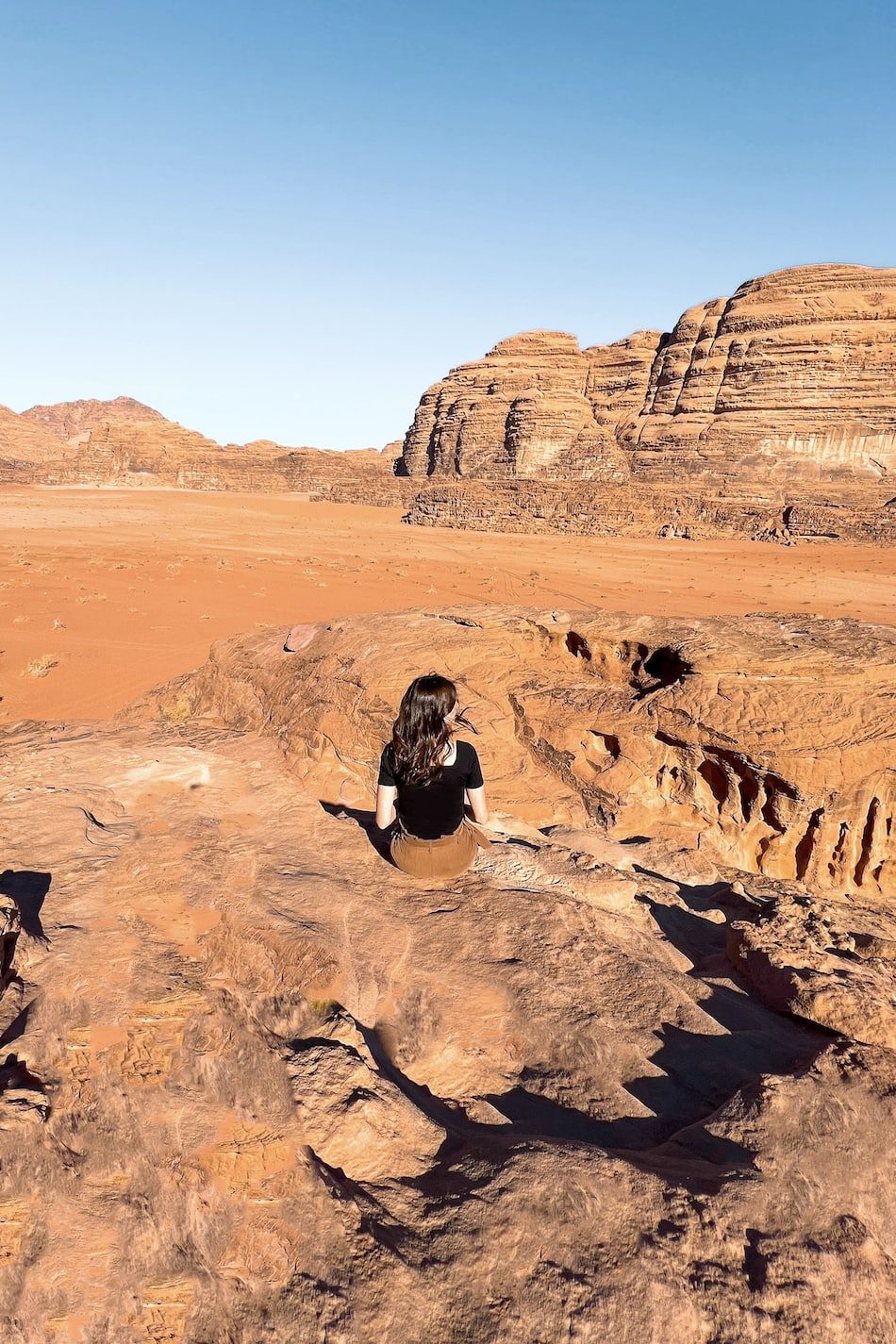
On the fifth day of your Jordan itinerary, start the drive to Wadi Rum early in the morning. The drive from Petra is just under two hours. Wadi Rum is one of the world’s most famous deserts and is a must on this Jordan itinerary. It’s a large protected area covering 278 sq mi (720 sq km) in southern Jordan. It has appeared in movies such as Lawrence of Arabia, Dune, The Martian, and Rogue One: A Star Wars Story.
The incredible desert is reminiscent of what I imagine Mars to look like. There are large rock formations, hot springs, red sand dunes, and canyons. The best way to see the desert is by Jeep. Tours can be arranged in advance or at the visitor’s center. If visiting during the high season, I recommend securing a tour in advance. Be sure to visit Khazali Canyon, Rock Bridge, and Lawrence’s Spring.
Stay overnight in the desert before returning to Amman or flying out of Aqaba in the morning. There are no hotels in Wadi Rum but there are campsites and some small bed and breakfasts. I recommend the Wadi Rum Bubble Luxotel. It’s a glamping experience with bubble-like tents, some even having private bathrooms.
Tip: Look into purchasing a Jordan Pass. It will likely save you money. The Jordan Pass is a sightseeing pass that includes admission to everything on this Jordan Itinerary (Petra, Wadi Rum, and many attractions in and around Amman). If you buy the pass before arriving in Jordan then it will also cover your visa fees if staying a minimum of 3 nights. There are three pass levels with the most basic offered at 70 JD ($99 USD).
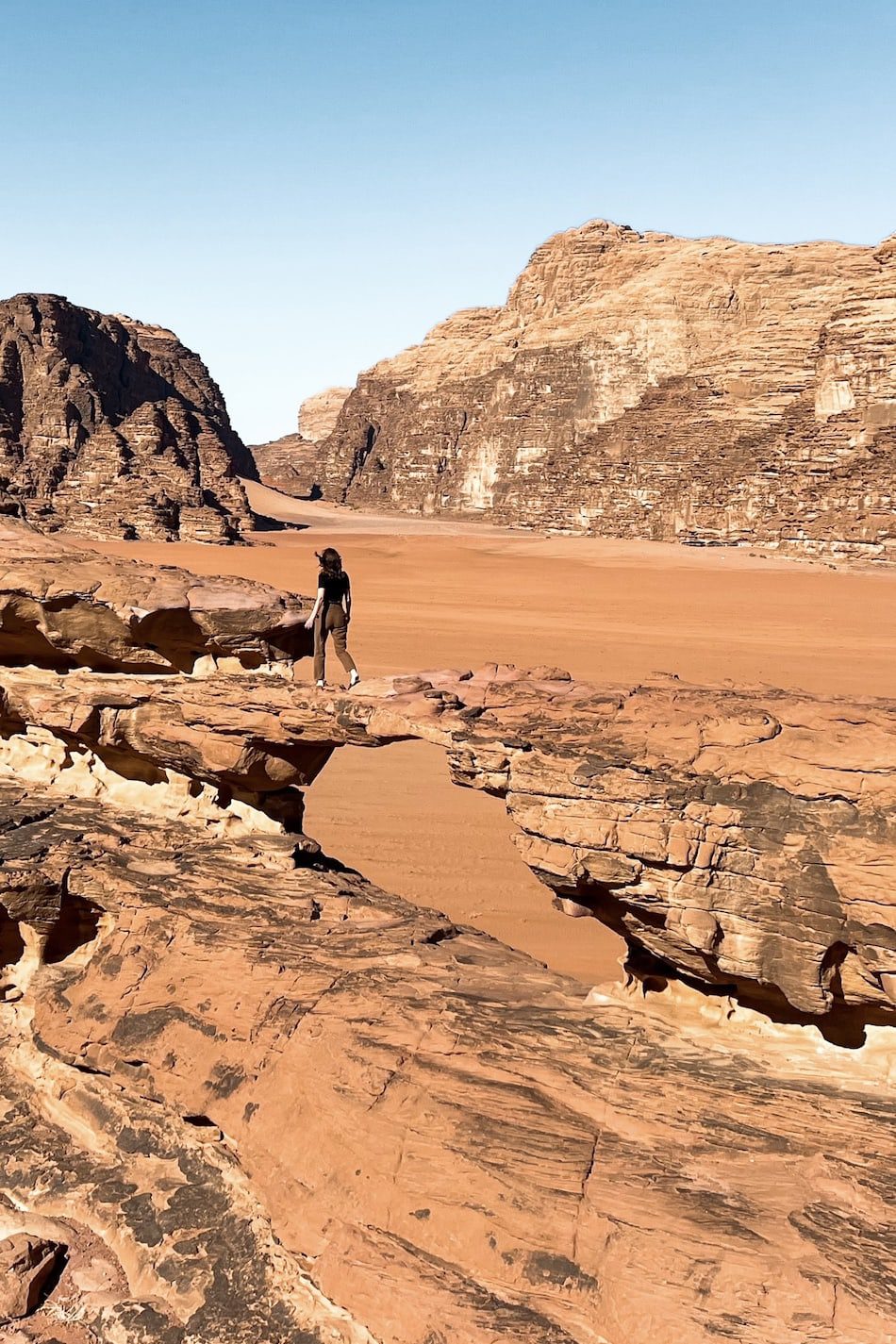
Wadi Rum
Where to Stay in Jordan
Dead Sea Spa Resort is an affordable option near the Dead Sea. The hotel is large, has basic amenities, and is family-friendly. There’s direct access to the beach and they have Dead Sea Mud available on the shore. There are pools on site but they may be closed depending on the time of year.
Petra Guesthouse Hotel is hands down the best choice when visiting Petra. It is located next to Petra’s entrance and makes visiting easy. You can wake up, have some complimentary breakfast (if they aren’t open yet then you can ask for a to-go box), and be the first at the gate. The hotel’s Cave Bar is great for a nightcap; however, I would skip the food here.
Wadi Rum Bubble Luxotel is a glamping experience in the Wadi Rum desert. The luxury campsite has bubble-like tents with some having private bathrooms. The location offers unbeatable views of the desert. There’s even a restaurant and jacuzzi on site.
Have you been to Jordan? Is there something I should add to this 5-day Jordan itinerary? I’d love to hear about your favorite sights. If you’ve enjoyed this post, please leave a comment or share using the social media buttons below. Are you traveling to Egypt after Jordan? Continue to my post, “The Ultimate 7-Day Egypt Itinerary: Cairo, Luxor, Aswan & Abu Simbel“.




Greetings, your insights on Jordan were very enlightening. I always anticipate your next posts for their depth and clarity. Thanks again.
Welcome! So glad to hear you enjoyed :)