Disclaimer: This post contains affiliate links. If you click through and make a purchase, I may receive a small commission (at no additional cost to you). This helps support and run my blog. I only recommend products I personally use and love. Thank you for your support.
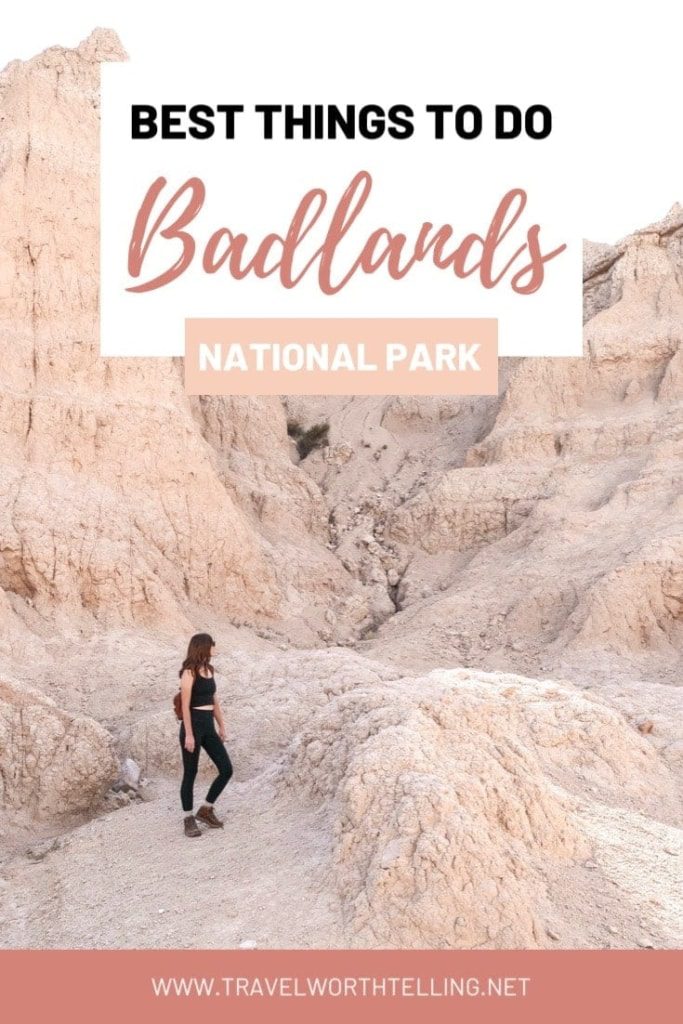
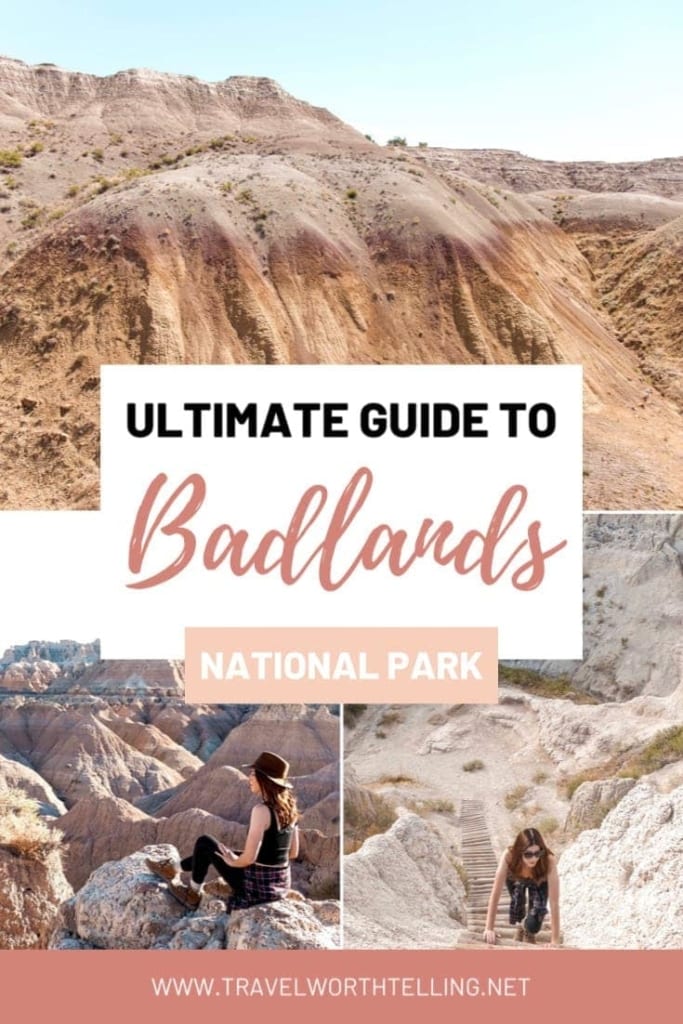
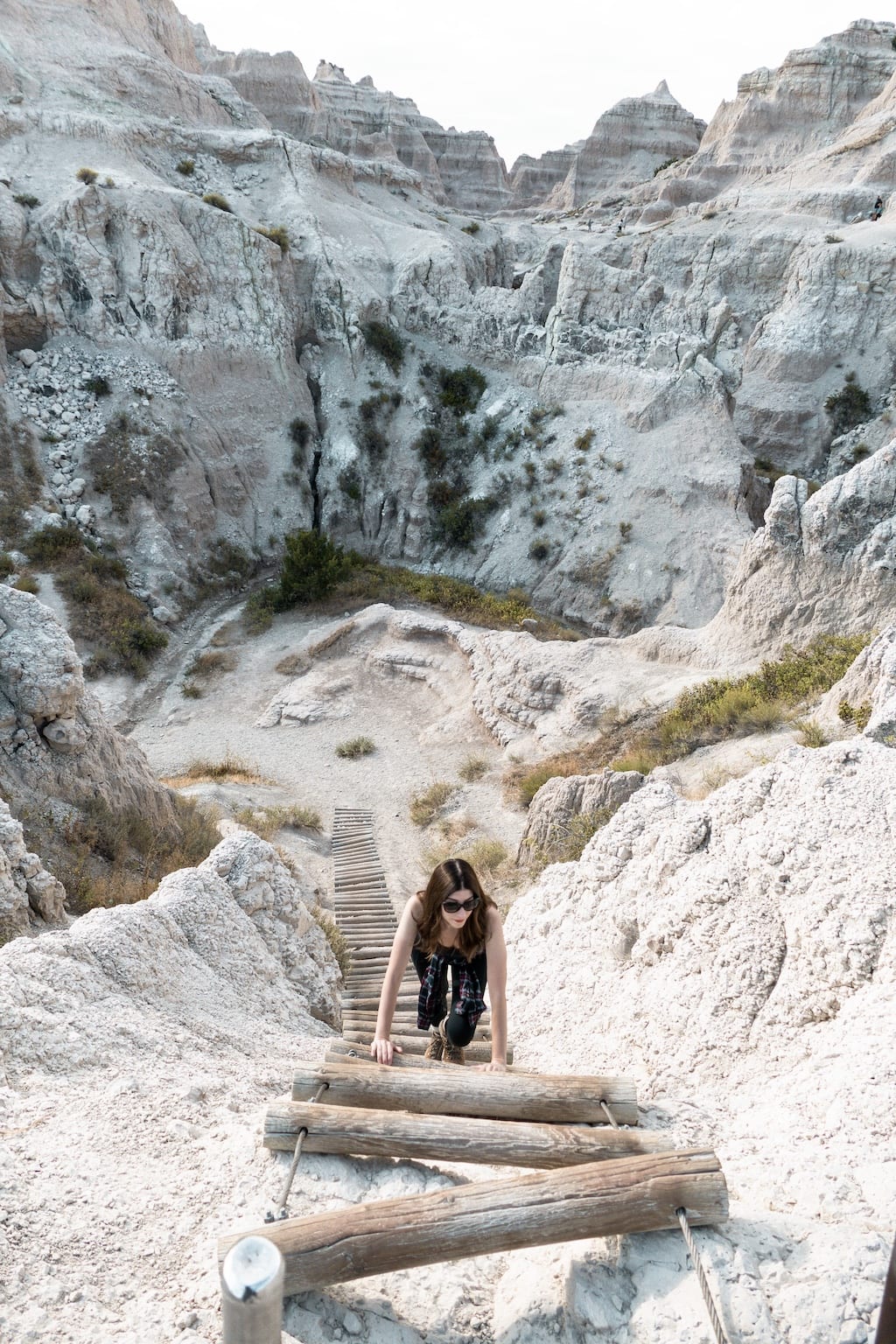
Badlands National Park is one of the most underrated and unique landscapes in the United States. Its name originated long ago when the Lakota people first called it “mako sica” or “land bad”. The extreme temperatures, rugged land, and lack of water made the area undesirable. Today, the term “badlands” is used to describe the terrain. Badlands National Park is a great place for hiking, wildlife viewing, or taking a scenic drive. This guide will provide you with everything you need to know before visiting as well as the top things to do in Badlands National Park.
History of Badlands National Park
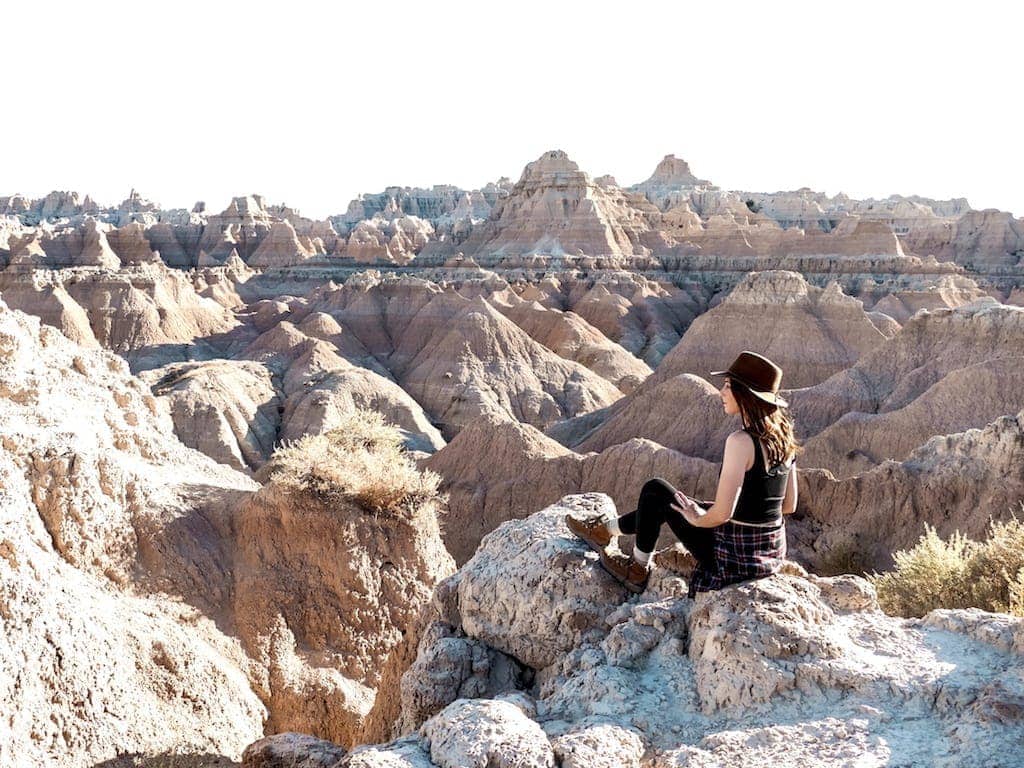
Badlands National Park was established as a national monument in 1939 and later re-designated a national park in 1978. The rocky formations were not always present though. The landscape that you see today was formed over tens of millions of years. The creation of the badlands began when the land started rising and sea waters receded.
As the environment changed, layers of sediment were deposited upon the dry seabed. The layers would eventually compact into soft rock and any animals trapped within the rock would fossilize. Badlands is home to some of the world’s richest fossil beds and many ancient creatures have been found in the park. Flowing waters eroded the sedimentary rock to form the ravines, buttes, and spires that we see today. The Badlands continue to erode at the rate of about one inch per year.
How to Get to Badlands
Badlands National Park is located 75 miles east of Rapid City, South Dakota. Many people tend to include Badlands on a road trip to surrounding areas; however, there is a nearby airport. A handful of airlines offer flights to Rapid City Regional Airport, including Delta, Allegiant, and United. No form of public transportation is available within the park, so plan to rent a car upon arrival.
The park protects 242,756 acres (982 sq km) of land in southwestern South Dakota. The land is separated into two units: the North Unit and the South Unit. The North Unit is designated as a wilderness area and is the more visited unit. This post will primarily focus on the north. The land in the South Unit belongs to the Oglala Sioux tribe (a sub-tribe of the Lakota) and lies within the Pine Ridge Indian Reservation. This unit is currently co-managed by the park service and the tribe. Much of the South Unit is undeveloped and there are no roads going in. However, you can still drive its perimeter for some great views.
Depending upon your itinerary and where you are coming from, you’ll access the North Unit through one of three entrances. The Pinnacles Entrance will be used if you’re coming from the west, the Interior Entrance if you’re coming from the south, and the Northeast Entrance if you’re arriving from the east.
Top Things to Do in Badlands National Park
1. Hike Notch Trail
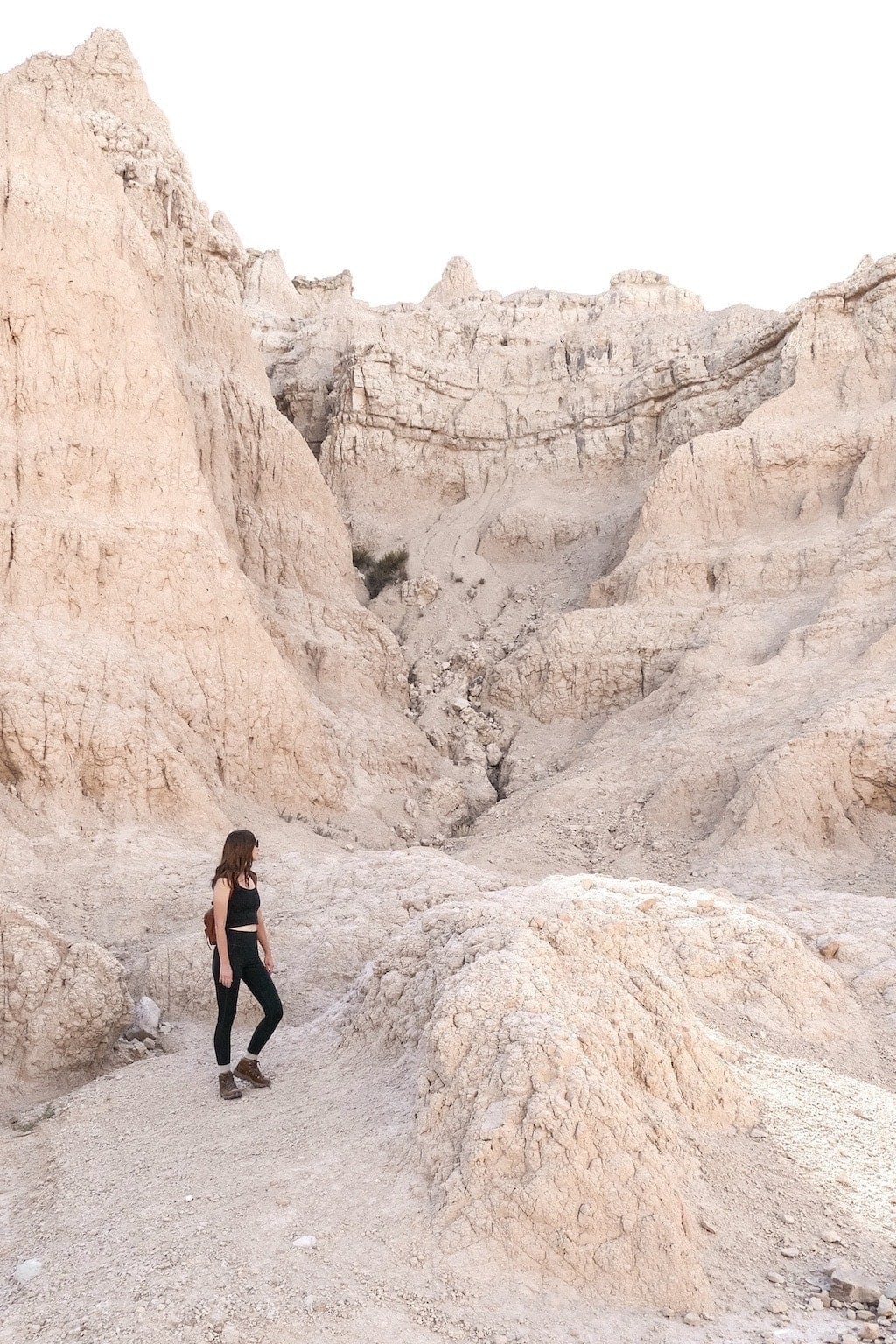
If you are going to pick just one trail to experience at Badlands then I recommend choosing Notch Trail. It’s one of my top picks for things to do at Badlands National Park. Notch Trail is a short trail that is about 1.5 mi (2.4 km) round trip and is what I would consider moderately difficult. The sign at the trailhead implies that it is more difficult and takes more time than it actually is/does. I found it to be fairly easy, but understand how parts could be difficult for some.
It took me about an hour and a half to complete at a leisurely pace with lots of photo taking. Traffic on the trail can be heavy and there is little to no shade. I suggest going in the early morning to avoid both the crowds and the heat. I found 7 am to be perfect. You’ll want to park in the lot that is designated for Notch, Window, and Door Trails. The trailhead is located at the south end of the parking lot and the trail begins by winding through a canyon. Look for the markers if you’re having trouble locating the designated trail.
After following the trail for about .5 miles (.8 km), you’ll find a 50 ft (15 m) ladder. The ladder is the highlight of the trail. It looks steeper than it is and is not too difficult to climb. The trail continues along the ledge of a cliff and through an area of rocky landscape resembling that of another planet. Those with a fear of heights may find this part to be challenging. After a short distance, the trail ends rather abruptly and you’ll find beautiful views of the valley below.
2. Drive Badlands Loop Road
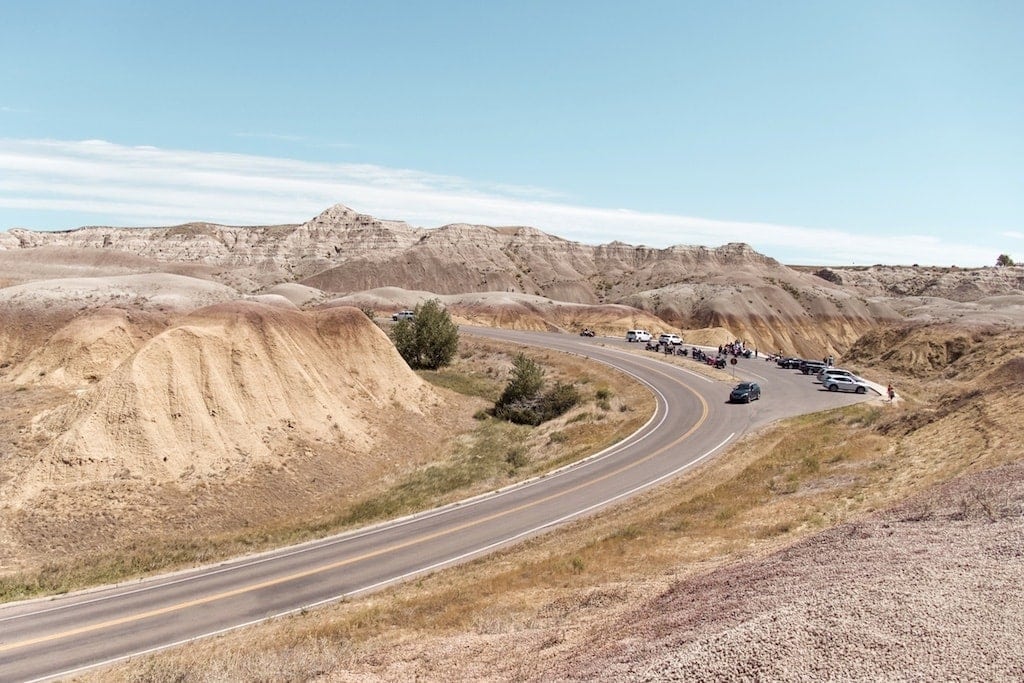
Loop Road is a 38 mi (61 km) stretch of Highway 240 that runs from the town of Cactus Flat to Wall. Without stopping, it would take about an hour to complete the stretch but you’ll definitely want to take advantage of the incredible roadside photo ops. The road passes through buttes, pinnacles, and beautiful prairies.
There are 15 overlooks and a handful of trails along the drive that you’ll want to check out. Be on the lookout for wildlife as well. Bighorn Sheep, prairie dogs, bison, and more can be spotted throughout the landscape. Must-visit points include Big Badlands Overlook, Panorama Point, and Pinnacles Overlook. A drive through Badlands’ unique terrain is truly special.
3. Watch the Sunset at Pinnacles Overlook
The Pinnacles Overlook is one of the best vantage points in the park. It’s located just one mile south of the Pinnacles Entrance and while you can get great views from the parking lot, I suggest continuing to the observation deck. A set of stairs, located off of the parking lot, leads to a short trail that you will follow to the deck and the ultimate Badlands view.
The overlook is located at one of the highest points in the park. Sunset is the perfect time to visit and catch the beautiful glowing rock. It can also be a great place for wildlife. Look carefully among the rocks and you might get lucky and spot a bighorn sheep.
4. Experience Sunrise at Panorama Point
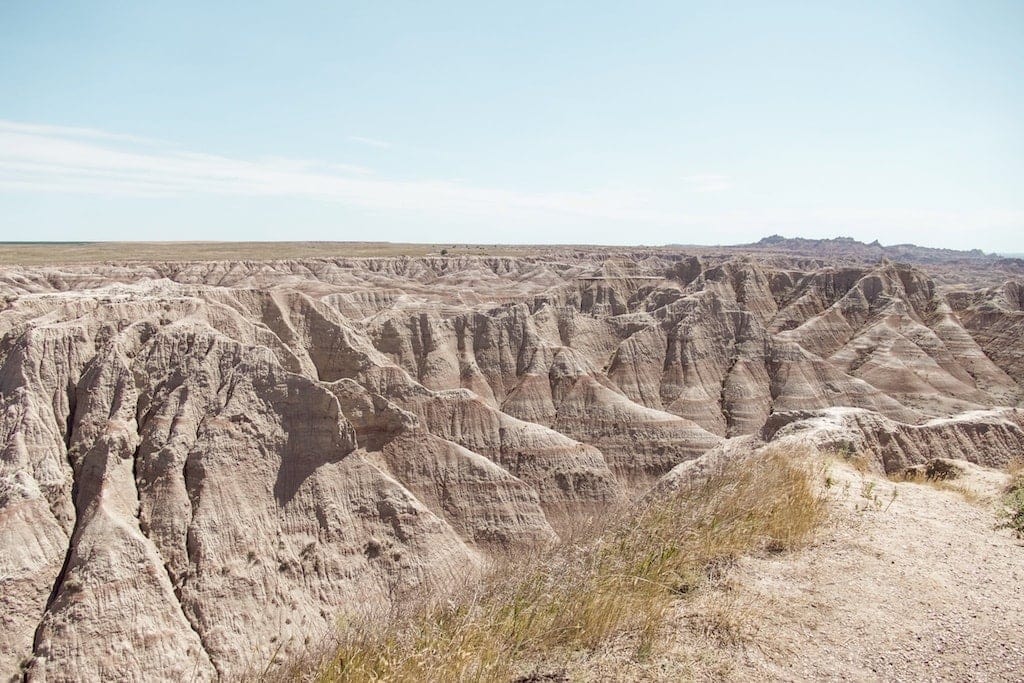
Get your camera ready! As its name suggests, Panorama Point is the perfect place for a panoramic view of the Badlands. You’ll find expansive views of the rocky pinnacles mixed with green prairie. The view is especially breathtaking at sunrise. It’s located about 10 mi (16 km) north of the Interior Entrance on the left-hand side.
5. Visit Robert’s Prairie Dog Town
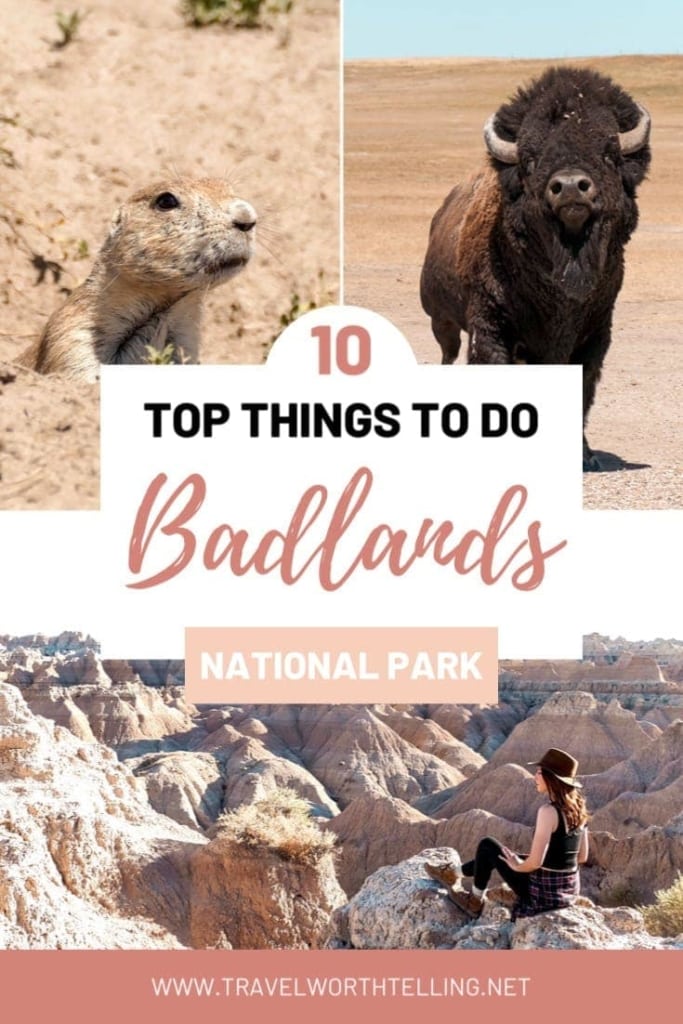
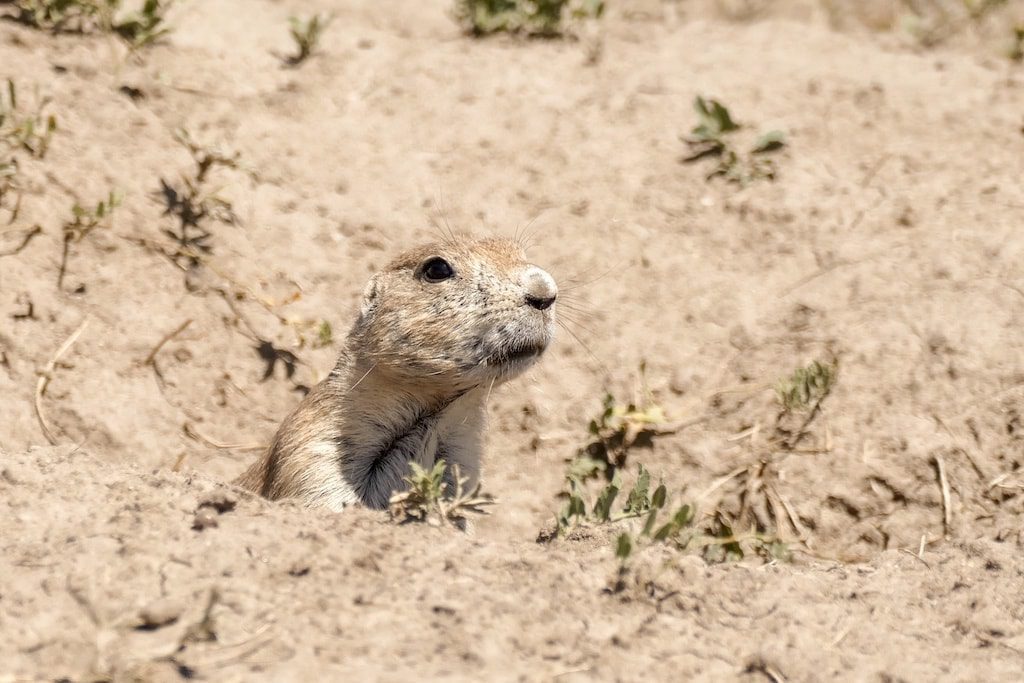
Before visiting Badlands, I had never seen a prairie dog before. They are cute little critters that are closely related to squirrels and chipmunks. They were once plentiful throughout the American plains, but the population is now at only 5% of what it once was. Many of them were killed off either by disease or with poison during the westward expansion by settlers. If you’re wishing to see prairie dogs then Robert’s Prairie Dog Town is an excellent place for viewing and should be a must-do on your list of things to do in Badlands.
Robert’s Prairie Dog Town is located off of Badlands Loop Road and is just a short drive from the Pinnacles Entrance. It’s located about 4.5 mi (7km) down Sage Rim Creek Road. It’s an unpaved road but is still suitable for a regular car. You’ll see hundreds of small dirt mounds on your right-hand side as the area has been overtaken by prairie dogs. The animals live in complex underground colonies that are often called “towns”.
The underground colony occupies several acres of land and the towns are divided up into different areas with each serving a different purpose. The prairie dogs can be quite vocal and let out cute little “barks”. The “barks” are chirp-like noises and are used to signal possible danger to one another. They have become used to humans and allow you to get fairly close but please don’t feed the wildlife. Feeding them causes them to become dependent on humans for food.
6. Stop at Yellow Mounds Overlook
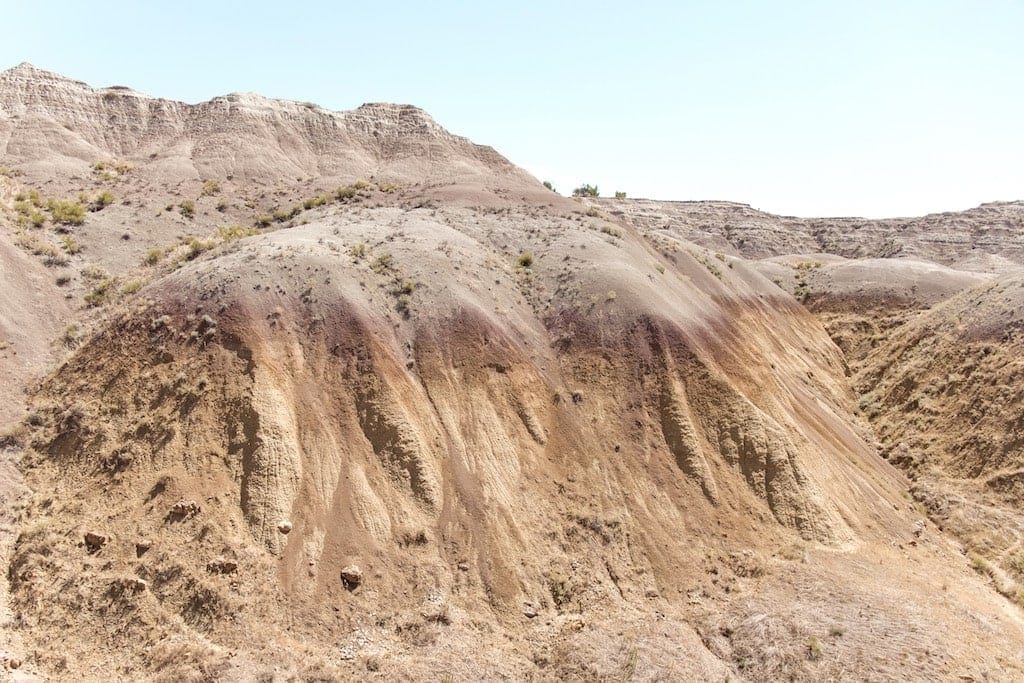
A stop at Yellow Mounds Overlook is a must. Many of the landscapes within Badlands tend to blend together after a day at the park but this overlook’s colorful hillside makes it stand out from the rest. Most of the park’s rocks are varying shades of beige but as you drive into this area of the park, you’ll find bright yellows.
The mounds are some of the oldest rock formations in the park and were actually once the seafloor. They formed after the sea disappeared and the black ocean mud was left exposed to air. They can be seen from both sides of Loop Road but I suggest parking and exploring the area on foot. Climb some of the smaller hillsides and be rewarded with amazing views of even more colorful mounds.
7. Walk the Cliff Shelf Nature Trail
Cliff Shelf Nature Trail is one of the few heavily vegetated areas within Badlands National Park. You’ll find that trees are sparse within the park so this short trail is a fun way to change up the scenery. The Cliff Shelf Formation directs rainwater to the area and helps produce more plant life here than in other areas of the park. This has also made it a popular spot for birds and other wildlife.
The trail is located near the southern end of the park near the Interior Entrance and can be completed in about 20 minutes. It’s an easy .5 mi (.8 km) loop that consists of boardwalks, some stairs, and dirt pathways that wind through a Juniper forest.
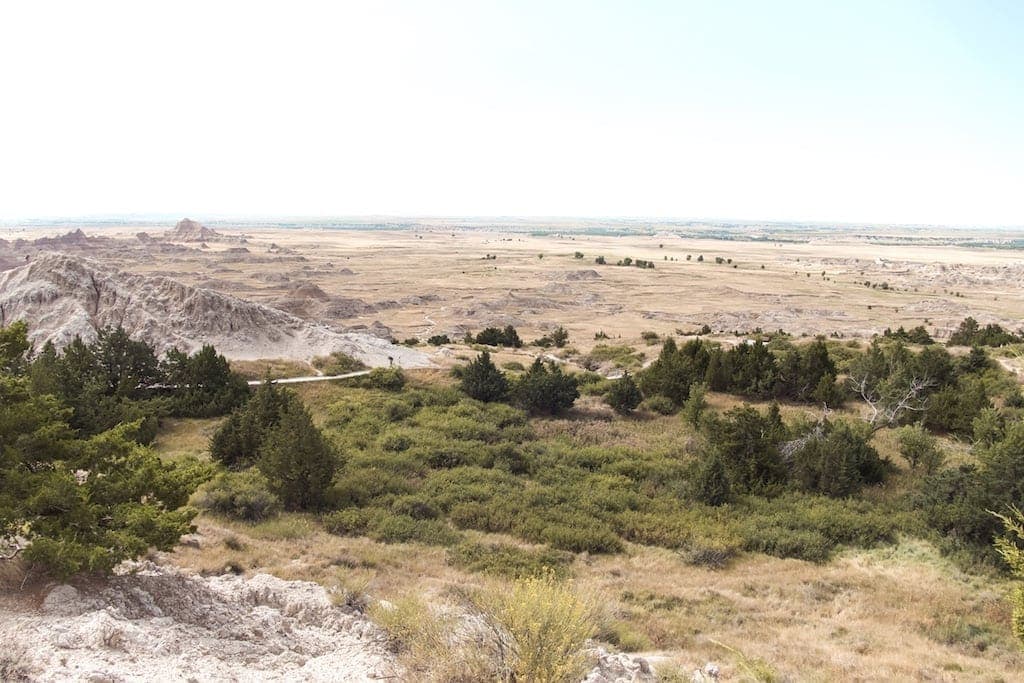
8. Trek Door Trail
Door Trail is another fun and easy trail. The Badlands Wall is an eroded and rocky landscape that is several miles wide and over 60 mi (97 km) long that the park is named after. The Door Trail leads to a break or “door” in the wall that provides a stunning view of the landscape beyond the wall. It’s a great trail to do around sunset.
The trail is just .75 mi (1.2 km) round trip and shares the same parking lot with Notch Trail. It starts as a boardwalk and soon leads into open ruggedness. At the end of the boardwalk, you’ll find a great view of the rock formations below and will then continue down a set of stairs to the right.
The trail from this point on is undefined and you’ll have to follow the markers, consisting of a series of twelve numbered yellow poles. The trail is rocky but flat. Keep going until you reach the sign that clearly states you have reached the end of the trail. At this point, you’ll find a gorgeous cliffside view.
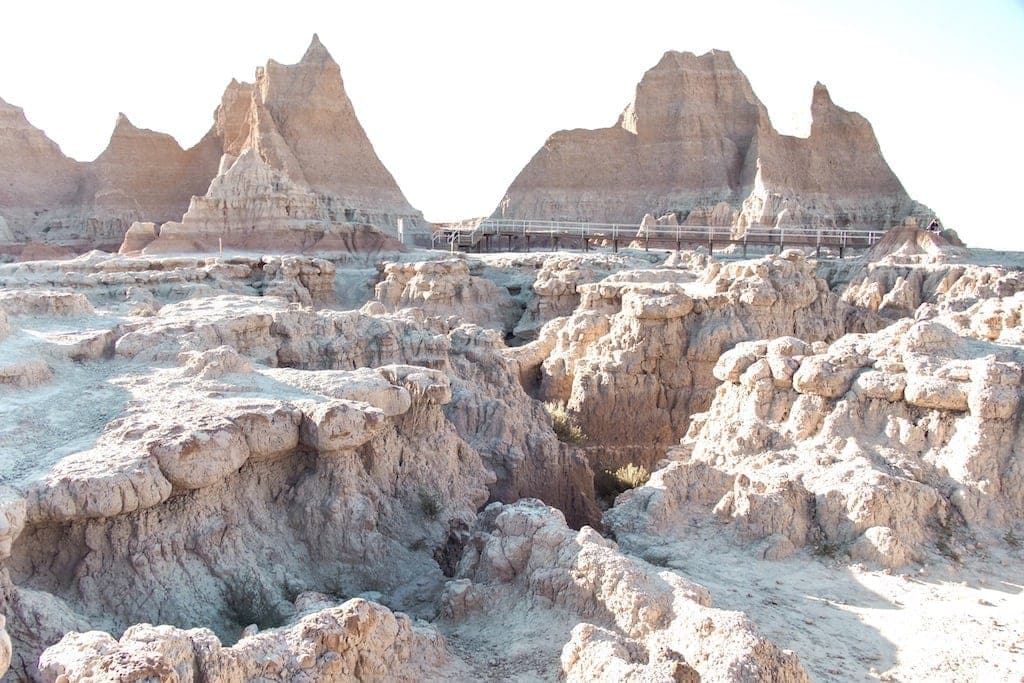
9. Walk the Fossil Exhibit Trail
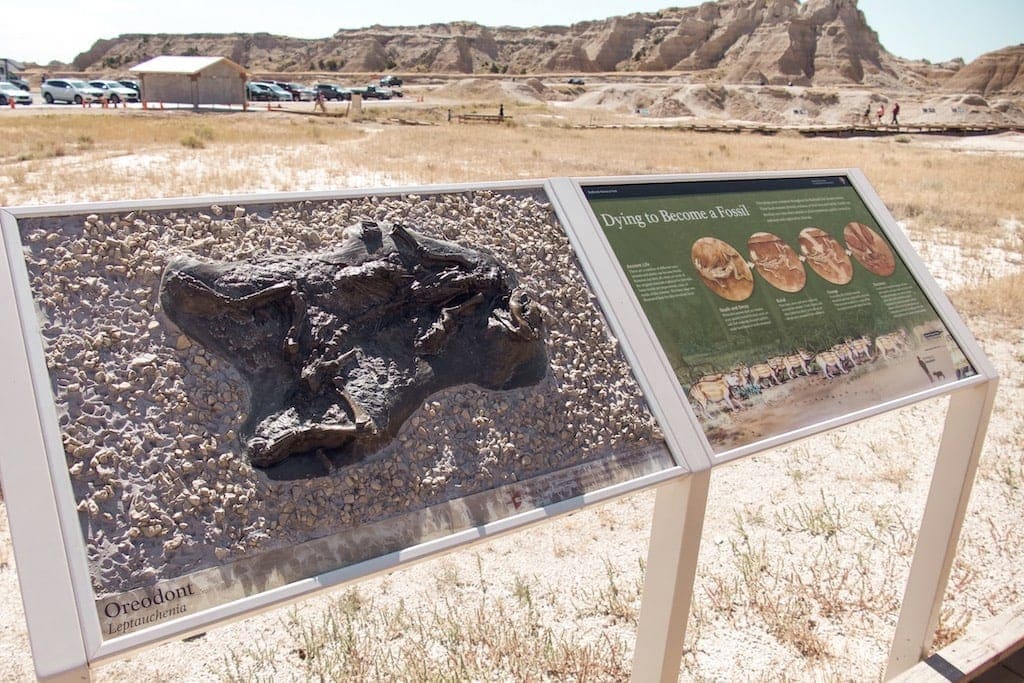
Badlands has one of the highest concentrations of fossils in the world. Numerous fossils have been found mixed within the sediments from the period known as the Oligocene Age. The Fossil Exhibit Trail is a very short loop ( .25 mi/ .4 km roundtrip) that is entirely on a boardwalk and features replicas of these fossils. The fossils are from now-extinct creatures that once called the area home. The trail is both family-friendly and handicap-accessible.
10. Watch Incredible Wildlife
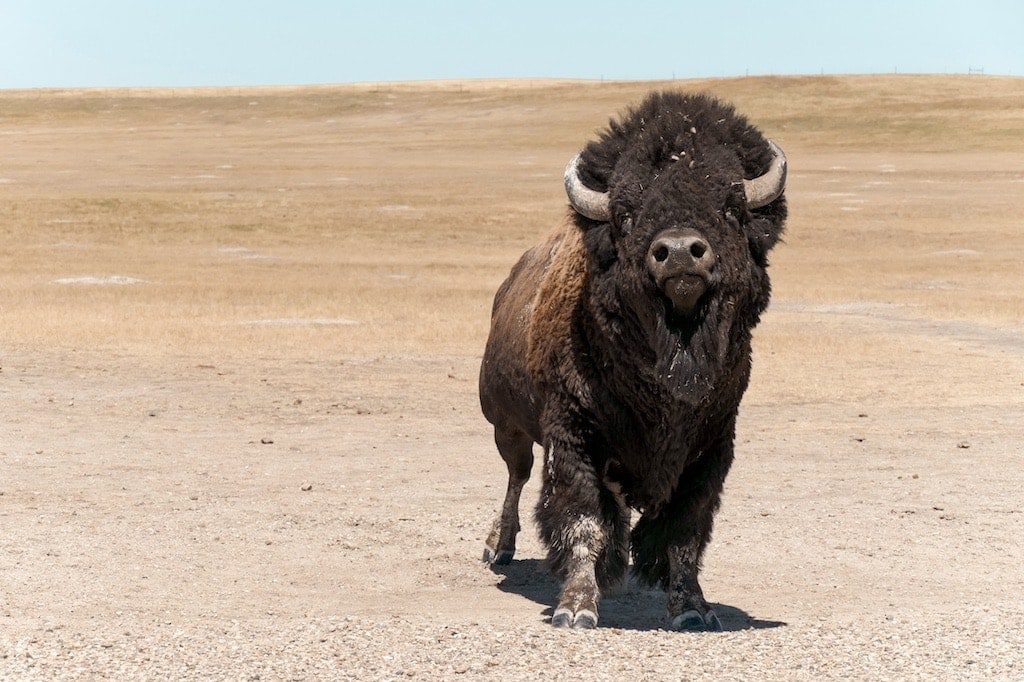
Badlands National Park is full of wildlife but sometimes it can be challenging to spot. Two of the easiest animals to see in the park are bison and prairie dogs. As mentioned above, Robert’s Prairie Dog Town is your best bet for seeing prairie dogs but if you continue driving along Sage Rim Creek Road then you will likely see bison as well. Large herds roam the area and can often be found roadside.
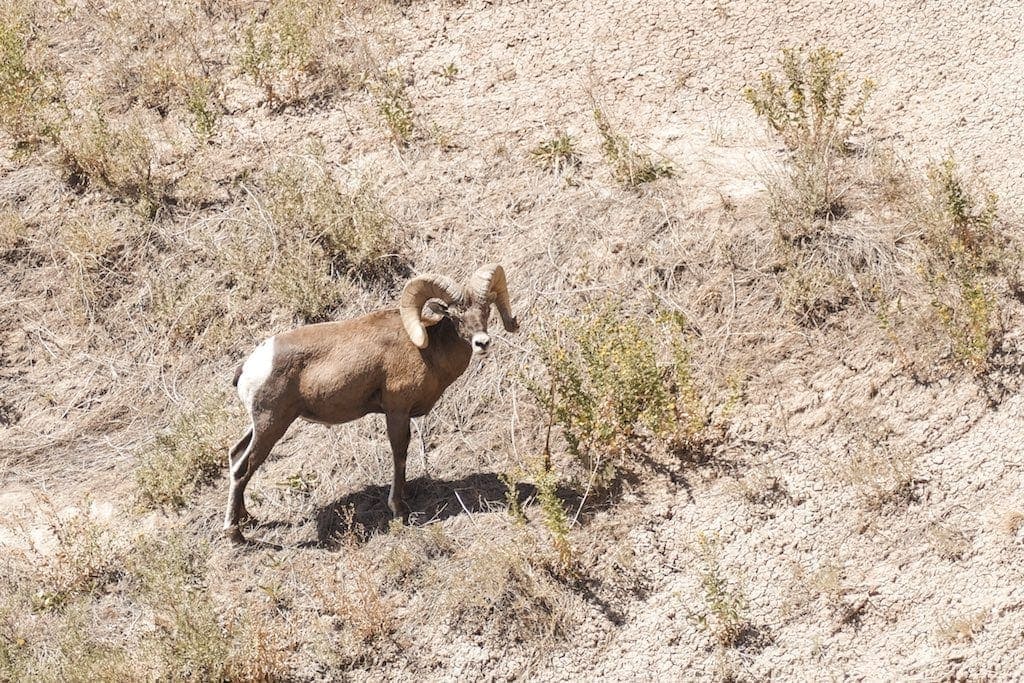
Other animals that call the Badlands home are the bighorn sheep, pronghorn, rattlesnakes, and the endangered black-footed ferret. You have a good chance of spotting a bighorn sheep if you drive slowly through the park and are constantly scanning the rocks. I was able to find one in the rocky area below Sage Rim Creek Road, just a few minutes down the road from the Badlands Wilderness Overlook.
Best Time to Visit Badlands NP
Badlands National Park is open year-round and can be a great place to visit most months of the year. However, the summer and winter months do require more planning. Badlands is one of the lesser-visited national parks but summer still tends to be the most popular time to visit and can be crowded. Temperatures can reach over 100 ° F (38° C) during this time.
To avoid the crowds and the heat, plan hikes for early morning or evening. One great thing about the summer is the long daylight hours. During June, there are days when the sun doesn’t set until 8:30 pm.
Winters can be extremely cold and the weather may cause road closures. The area can see quite a bit of snowfall and temperatures can drop below zero. There’s less wildlife present and you’ll probably want to avoid visiting during this time. Late fall is an ideal time to visit the park. The months of September through early November see comfortable temperatures and fewer crowds. Late Spring is an option as well but you may encounter rainstorms.
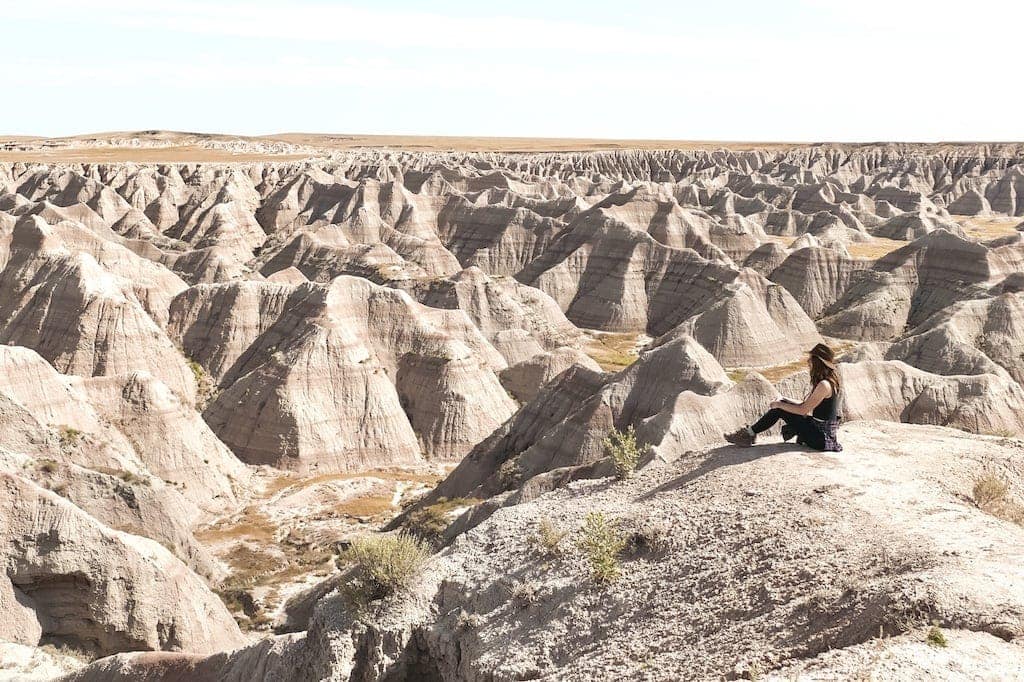
How Many Days in Badlands
Badlands National Park is doable as a day trip but I recommend spending 2-3 days in the park to truly experience it. By spending more time there, you’ll be able to enjoy it at a more leisurely pace and will have the opportunity to explore most of the park’s trails. You’ll also have some time to explore the nearby towns and some other attractions. That being said, you can still see quite a bit if one day is all you have. It’s possible to do all the above-mentioned things in a day if you get an early start and don’t mind being a bit rushed.
Entrance Fee
There are a few options when it comes to purchasing a Badlands park pass. The cheapest option is a seven-day pass. The cost is $30 for a private vehicle (this covers all of the vehicle’s occupants), $25 for a motorcycle, or $15 for an individual entering the park on foot or bicycle. If you see yourself returning to Badlands in the near future then you may want to purchase a Badlands National Annual Park Pass for $50. This pass admits a single, non-commercial vehicle into the park for a year from the month of purchase.
The America the Beautiful pass is an annual pass that provides access to over 2,000 federal recreation sites. The fee of $80 per vehicle includes all national parks, national monuments, national forests, and more. It’s a great deal if you plan on visiting at least 3 parks throughout the year and 100% of the proceeds are used for park improvements. For more information, visit the National Park Service.
Where to Eat Near Badlands
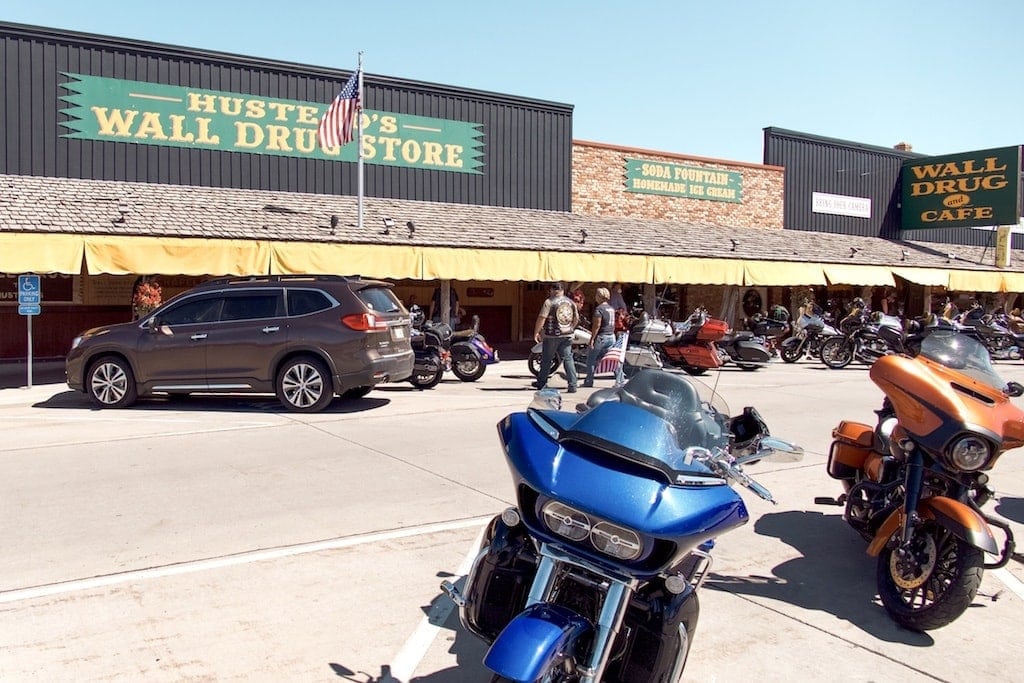
Cedar Pass Lodge houses the only restaurant within the actual park. It offers full meals as well as snacks. There are a handful of shaded picnic areas scattered throughout the park if you wish to pack your meals. There are some options in the small towns adjacent to the park as well. One of the most popular and touristy places is Wall Drug.
Wall Drug Store is an attraction in the small town of Wall. It’s a shopping mall of sorts with various merchants selling souvenirs, gifts, and more. It’s known for its fresh donuts, five-cent coffee, and free ice water. It also has a huge cafe area that can seat more than 500 people. It serves quick bites such as hamburgers, hot sandwiches, and even ice cream that is made in-house.
Other Things to See Near Badlands
There are some great options for day trips if you have some extra time in the area. The following are all within a few hours of Badlands:
Black Hills National Forest
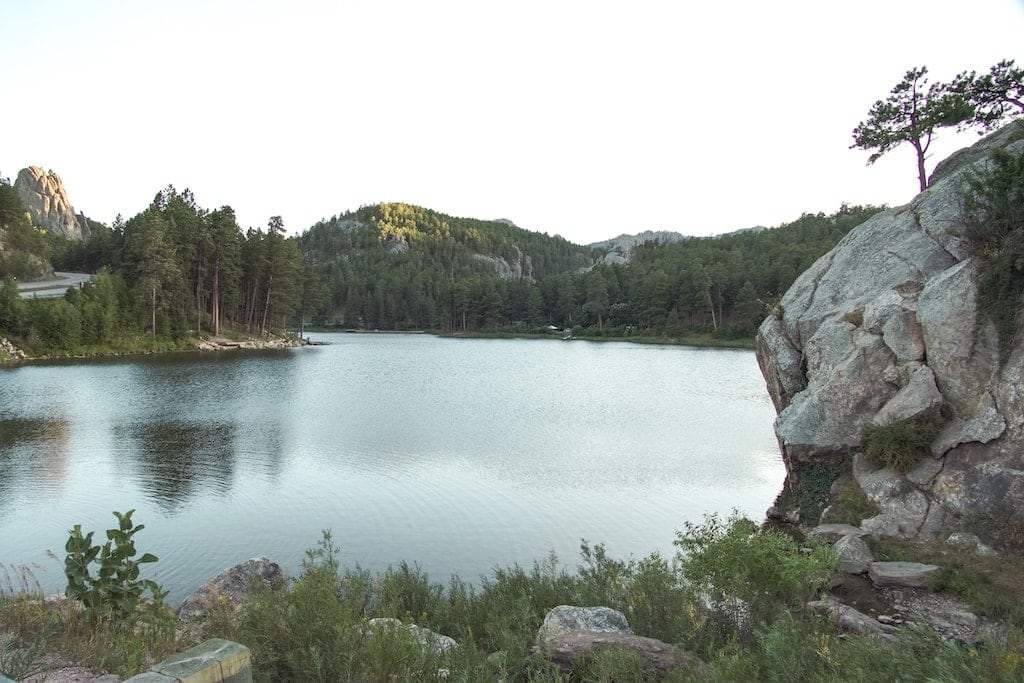
The Black Hills National Forest covers areas of western South Dakota and northeastern Wyoming. It’s about a two-hour drive from Badlands. It consists of 1.2 million acres (4856 sq km) of forest and mountain-covered lands. I recommend a drive through the area. It’s beautiful and there are a few fun stops:
Wind Cave National Park
Wind Cave National Park is located within the forest and is one of the longest and densest caves in the world.
Crazy Horse Memorial
The Crazy Horse Memorial is a monument dedicated to the Lakota warrior, Crazy Horse. It’s sculpted into the mountainside on privately held land and is currently a work in progress. Upon its completion, it will be the second-tallest statue in the world.
Mount Rushmore
Mount Rushmore is a well-known national monument within the Black Hills. It features the faces of four United States presidents carved into the mountainside. It has a dark history and I encourage you to do some research before visiting. In my opinion, it’s not a place that should be celebrated, but you find it worth seeing.
Devils Tower National Monument
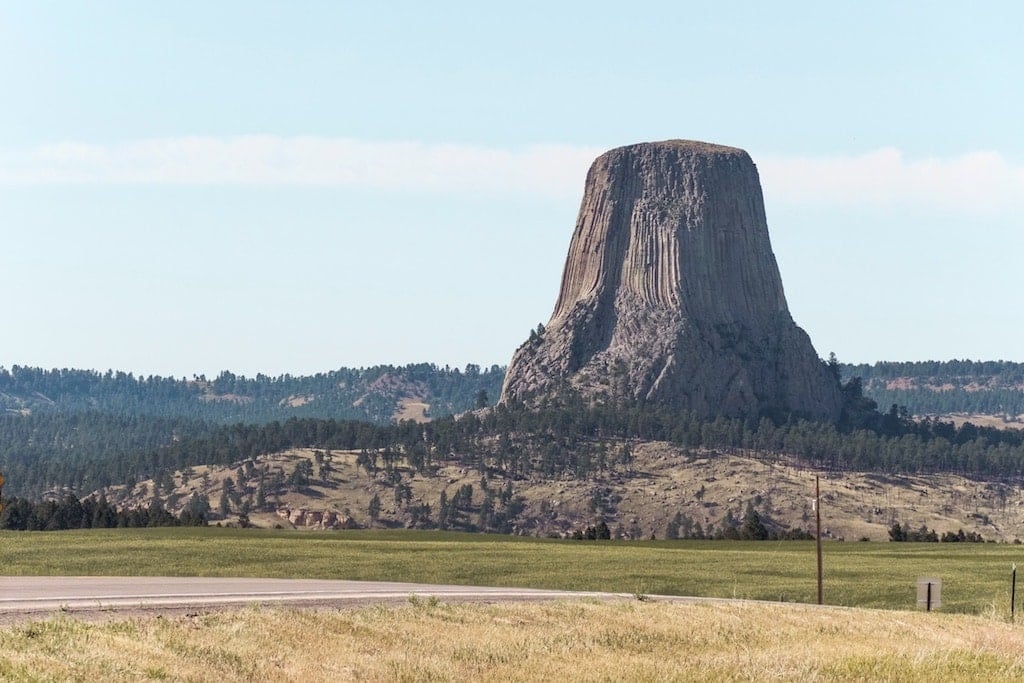
Devils Tower National Monument is located near the state line in northeast Wyoming and is about 2 hours and 45 minutes from the park. It’s a single, large granite formation that rises 1,267 ft (386 m) above the Belle Fourche River Valley. It was also the first national monument to be named in the United States.
Where to Stay at Badlands NP
The only place that offers lodging within the park is Cedar Pass Lodge. The cabins are newer and eco-friendly but tend to book quickly. The park also has two official campgrounds. These are Sage Creek Campground and Cedar Pass Campground. Sage Creek has twenty-two free campsites and is first-come, first-serve. Cedar Pass is a paid campground with ninety-six reservable sites and electric hookups for RVs. Other nearby options outside of the park include:
Badlands Budget Host Motel
Badlands Budget Host Motel is an affordable option located in the town of Interior. There isn’t much to do in the area but its location can’t be beaten. It’s located just one mile from the Interior Entrance. It’s a simple, no-frills motel with a small market, laundry, and pool onsite. The property also offers campsites and RV hookups.
Best Western Plains Motel
Best Western is usually a solid choice when it comes to budget hotels. Best Western Plains Motel is located in the town of Wall and is only ten minutes from the Pinnacles Entrance. It has both an indoor and outdoor pool and is within walking distance of Wall Drug.
Days Inn by Wyndham Wall
Days Inn is also located in Wall. It’s a standard-budget hotel that offers free continental breakfast, WiFi, and free parking. It doesn’t have a pool but does have an on-site fitness center.
Have you visited Badlands? What are your favorite things to do in Badlands National Park? If you’ve enjoyed this post, please leave a comment or share using the social media buttons below. Planning a national parks road trip? Continue to my post, “The Top 10 Attractions in Yellowstone National Park”.






I didn’t realize that this is one of the less visited US National parks. I keep seeing amaaazing posts like this about it, so I sort of assumed it would be really crowded. I would looove to hike and explore those crazy rock formations and see all the wildlife. Prairie dogs may sometimes have the plague, but they are flipping cuties!
I didn’t either…the roads were a bit crowded when we went but only because there was a huge event in town and hardly anyone of the trails. :)